What is a dukaton Silver Rider?
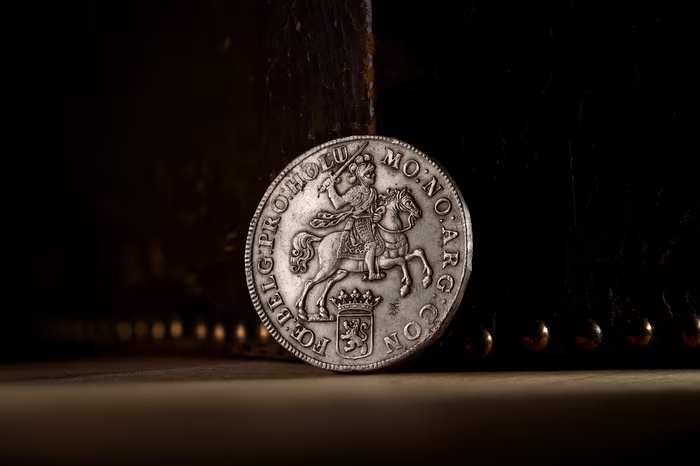
The dukaton Silver Rider is a silver trading coin of the Dutch Republic, struck for the first time in 1659. The coin is known for the image of a armoured knight on horseback and was used until 1798. Due to its recognisable design, reliable weight and high silver content, the dukaton became a familiar currency in Europe and in the East Indian trade.
The Dutch term silver rider refers to the iconic equestrian motif that made this coin internationally famous. Do not confuse the dukaton with the gold ducat, a smaller gold trade coin with a different origin.
Historical background of the ducaton (1659—1798)
The dukaton originated in the sixteenth century, when Italy introduced a crown-sized silver coin. The Dutch provinces adopted this concept and developed it in 1659 the variant that we know as the Silver Rider.
The coin was issued during the Golden Age, a period in which the Dutch Republic played a central role in global trade. The dukaton was valued for its standardized properties, which made it comparable to other major trading coins such as the Spanish silver dollar.
Major entities during this period include the United Provinces, the VOCS and trade routes towards Europe and Asia.
Design and features
Front: the harnessed rider
The obverse shows a knight on horseback with a drawn sword. Under the horse, it's province coat of arms where the coin was minted. This makes each dukaton recognisable by origin.
Features:
- Rider in armour with sword
- Provincial coat of arms
- Provincial legend
Reverse side: the United Netherlands
The flip side shows it crowned coat of arms of the United Netherlands. As a result, the currency was a symbol of unity at a time when the provinces still had a high degree of independence.
Weight, metal and nominal value
The dukaton Silver Rider was particularly appreciated for its reliable specifications.
Important properties:
- Weight: approximately 32.77 grams
- Silver content: 0.941 fine silver
- Nominal value: 3.15 guilders (60 nickels)
Thanks to these fixed values, the currency was effortlessly accepted in international trade and used by merchants from Amsterdam to Batavia.
What a dukaton brings today depends on the province, the date and the condition of the coin. The silver value is the floor; for a scarce provincial variety in good condition the auction value sits well above it. Have your dukaton appraised free of charge for a concrete valuation.
Provinces and mints
Various Dutch provinces brought ducatons into circulation. Each province gave its own coat of arms and sometimes variants in style and typeface.
Major provinces that beat the Silver Rider:
- Utrecht
- Holland
- West Friesland
- Gelderland
- Zeeland
- Other smaller provincial ranges
Today, this regional variation contributes to the collectible value and historical richness of the currency.
Circulation and use in trade
The Silver Rider dukaton was used as a reliable trading currency and circulated widely in:
- North-Western Europe
- The East Indian trade
- Local and international markets of the Dutch Republic
The coin was recognisable, stable in silver content and loved by traders. The design acted as a kind of brand identity for the Republic, similar to global trading coins such as the Spanish 8 realms.
Collectibility and legacy
Today, the Silver Rider dukaton remains one of the most popular provincial coins among collectors. Factors that make the currency special:
- Iconic design
- Rich historical context
- Regional variation by province
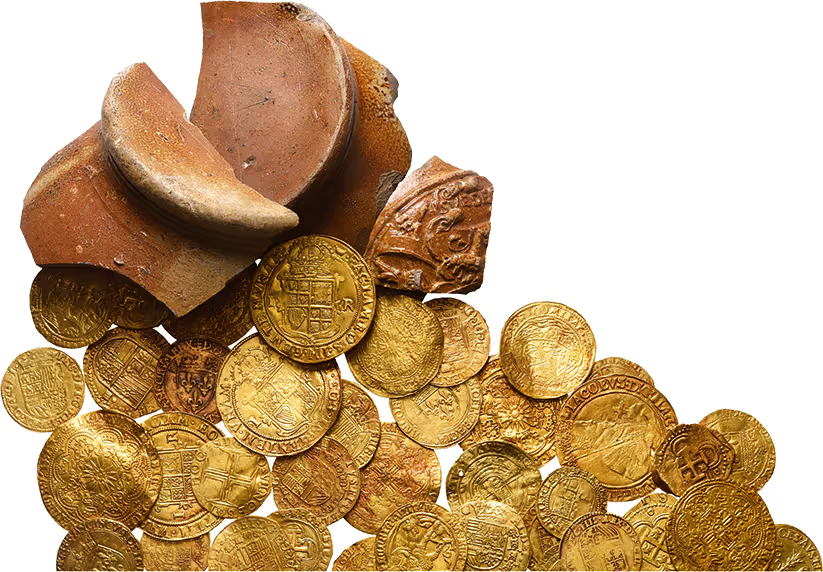
- High survival value thanks to ship finds
- Modern reissues, such as the 2022 issue of the Royal Dutch Mint
For collectors, the dukaton is a tangible symbol of Dutch cultural history, trading and numismatic art.
Take care with dukatons recovered from the sea or from the ground: the film on the surface is often patina rather than dirt. Cleaning or polishing these coins removes a large part of the collector value.
Summary table
| Characteristic | Details |
|---|---|
| First year of issue | 1659 |
| Minted until | 1798 |
| Weight | 32.77 g |
| Silver content | 0.941 fine silver |
| Obverse | Armoured knight on horseback |
| Reverse | Crowned coat of arms of the United Netherlands |
| Provinces | Utrecht, Holland, West Friesland, Gelderland, Zeeland |
| Historical trade value | 3.15 guilders (60 stuivers) |
| Function | Trade coin and symbol of Dutch prosperity |
Selling or appraising your dukaton
Do you own a dukaton and would you like to know what it is worth? At Schulman we look at the province, the date, the quality and the provenance of the coin. On that basis we advise whether a direct sale or consignment to an auction yields the most.
We have appraised and sold silver coins from the Dutch Republic since 1880. Request a free appraisal or make an appointment for an assessment in person.