Ships carried coins and precious metal across the sea, and sometimes they never arrived. This map holds 41 wrecks whose coin cargo or coin find is documented, with the find and the source given for each one. This is where the VOC coins, ducatons, silver riders and Spanish reales come from that still turn up at auction today.
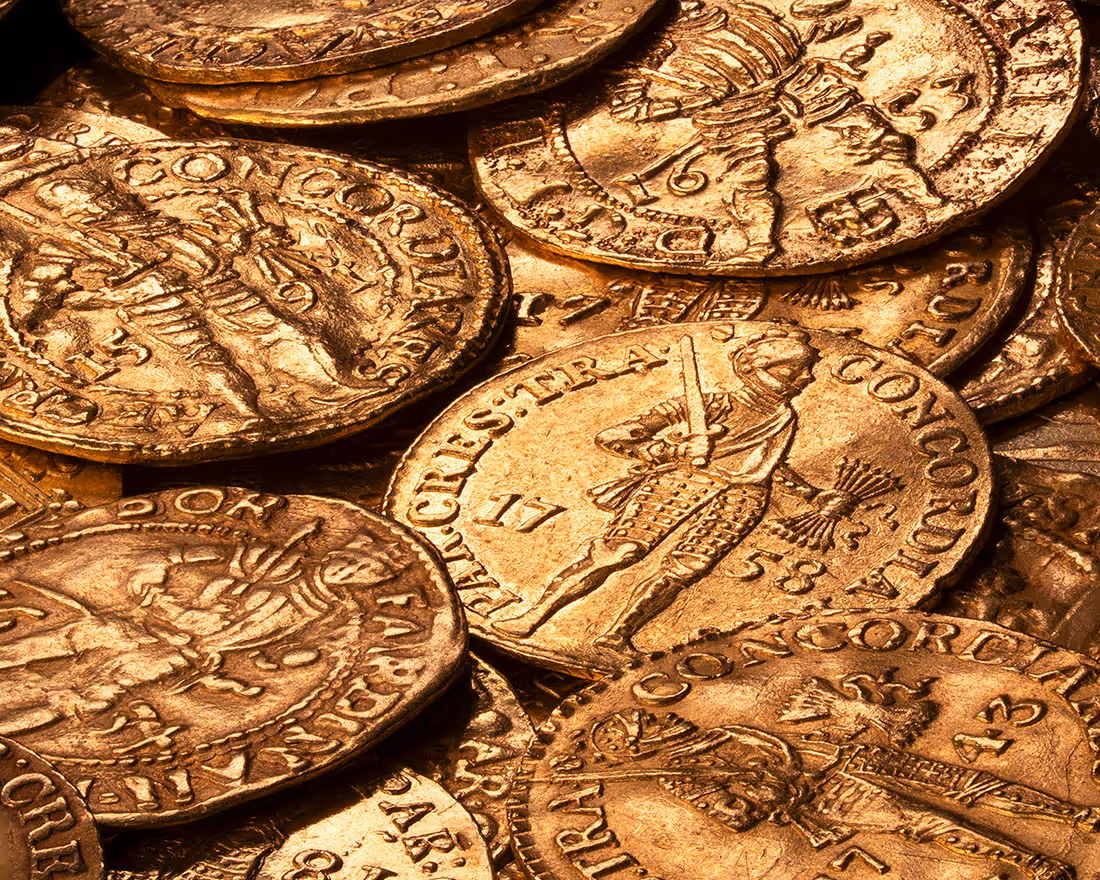
Wreck coins tell a story about trade routes, the risks of the sea and the role of money in the past. A well documented provenance increases the historical value and prevents unfounded claims or forgeries.
Ships of the Dutch East India Company carried large consignments of silver coin on the outward voyage, to buy goods in Asia. The coin cargo is documented for all 25 Dutch wrecks on this map, from the Kampen (1627) off the Isle of Wight to the Reijgersdaal (1747) off the Cape.
Coins commonly found:
Fleets carrying silver and gold from the New World sailed to Europe by way of the Caribbean. Examples include Nuestra Señora de Atocha, the 1715 Fleet and Nuestra Señora de las Maravillas.
Coins commonly found:
Few wrecks from antiquity have produced a real coin find. The Antikythera wreck yielded thirty-six silver cistophoric tetradrachms in 1976, thirty-two from Pergamon and four from Ephesus; the Kyrenia ship seven bronze coins. Few pieces, but enough to date both ships.
Wreck coins surface more often than people think: from an estate, at a fair or with a detector. Send a photo of the obverse and the reverse and our numismatists will work out which piece it is and what the provenance means for its value.
Request a free appraisalLost on the banks around the Deurloo channel shortly after leaving Rammekens. Since Rex Cowan found the wreck in 1981, 2,000 gold ducats and 5,000 silver reales have been recovered.
Lost on Gunner Rock in the Isles of Scilly. Of the roughly 130,000 guilders on board, more than 35,000 silver coins have been recovered, including West Friesland riders of 1742.
The Runde treasure, recovered off the Norwegian coast in 1972: about 57,000 coins, including 6,600 gold ducats of Utrecht 1724. Before that find only a handful were known.
Lost on the Goodwin Sands off Kent with thirty chests of silver bars and Mexican coin, fl. 300,082 in all. Since 2016 it has been a protected site worked only for research.
Lost at Mio Ness in the Out Skerries, carrying 227,000 guilders in bags and 1,800 gold and silver ducats. The first coins washed ashore in 1965; the wreck itself was found in 1968.
Lost on the Silva Shoal in the Mozambique Channel, with fourteen barrels of copper coin, 29 chests of silver bars and one chest holding 5,000 gold ducats.
Several wrecks along the Treasure Coast. Gold escudos and silver reales regularly find their way into collections.
Look for publications, salvage reports and earlier auction records. A clear paper trail strengthens confidence.
Salt water causes crystallisation and corrosion. A stable, controlled storage environment is important.
Silver and gold bars often carry hallmarks or maker's marks. These help link a piece to a specific cargo or route.
Some wrecks are protected. Trade should always respect legislation and cultural heritage.
You are welcome to visit our team in Amsterdam's Museum Quarter for advice.
Please feel free to contact us for an initial indication, or schedule an appointment for a personal appraisal in Amsterdam.


Place bids easily via our user-friendly app.