Coins Found with a Metal Detector: How to Determine Their Value and Sell Them Safely
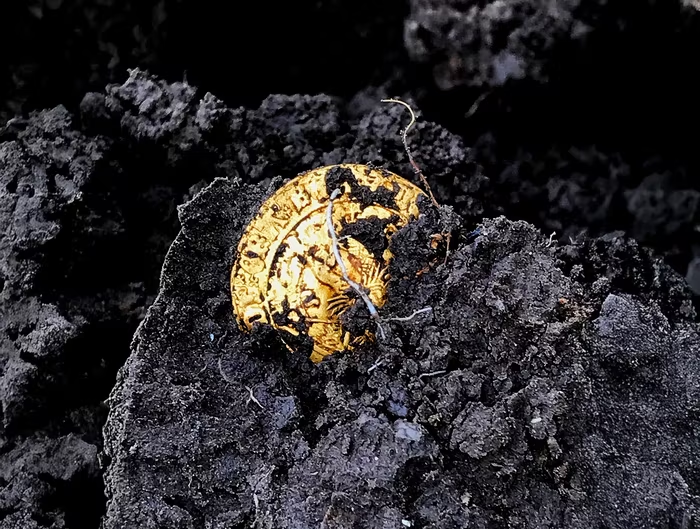
Those who go out with a metal detector may uncover remarkable coins. From medieval denarii to provincial issues from Holland, Utrecht, or West Friesland, what you dig up is almost always older than the plot of land it lay in. An increasing number of detectorists want to know what their coin is worth and what the best way is to sell metal-detected coins safely and responsibly.
Schulman b.v. has guided collectors and finders for more than 145 years and offers both direct purchase and international auction options. In this guide, you will learn how to properly assess, document, register, and offer your find.
What Determines the Value of Found Coins?
Period and Origin
Coins from clearly identifiable periods often carry additional historical significance. Examples include:
- medieval city issues from places such as Kampen or Deventer
- provincial coins from Holland, Zeeland, or West Friesland, such as a Ducaton or silver rider
- emergency coinage from the Eighty Years' War
- Roman bronze and silver coins
Metal Type
Silver and gold have intrinsic value, but for numismatic finds, historical context and rarity are usually more important than the metal price alone. Want to learn more about how value is built up? Read our guide how do I know what my old coins are worth.
State of Preservation
Metal-detected coins vary widely in condition. Even a corroded or worn coin may still be valuable if it is rare or represents an important or unusual type. The presence of patina is often a positive sign: it confirms authenticity and is a natural part of an aged coin.
Rarity and Variants
Specific dates, dies, or provincial variants, such as a Silver Rider, Ducaton, or Stuiver, can make a find particularly attractive to collectors.
Want to know exactly what your find is worth?
Send us a photo of your find and our numismatic experts will assess type, rarity, and market value. Free and without obligation.
Request a free appraisalWhat Should You Do Immediately After Finding a Coin?
Do Not Clean the Coin
Never clean a coin.
Do not polish, brush, or chemically clean it using substances such as lemon juice. These actions irreversibly damage patina, surface details and design elements, and reduce the value with them. Read why in why you should never clean or polish your coins.
Store the coin in an acid-free envelope or a coin capsule.
Record the Find Location
Note the exact location where the coin was found. This information is important for historical interpretation and for proper documentation with PAN.
Store the Coin Safely
Avoid friction and keep the coin dry and cool.
Registering the Find with PAN
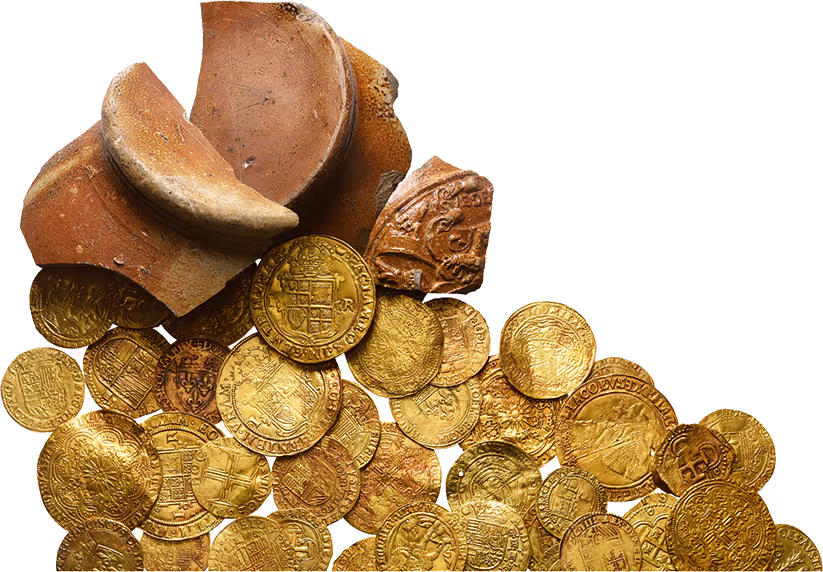
Metal-detected finds provide valuable information for historical and archaeological research. In the Netherlands, finds can be voluntarily registered with PAN (Portable Antiquities of the Netherlands). A striking example of what such finds can mean for science is The Kempen Hoard.
Why Register with PAN?
- Scientific contribution
PAN documentation contributes to knowledge about settlement, trade, circulation, and conflict. - Transparent provenance
Well-documented coins are easier to assess during appraisal and more attractive to collectors. - You remain the owner
Registration does not affect ownership.
How to Register a Find with PAN
- Take clear photographs of the obverse, reverse, and edge.
- Record coordinates or a detailed description of the find location.
- Submit the find via the PAN website.
- After review, you will receive an official registration.
PAN Registration or Valuation First?
- For exceptional finds: have the coin assessed by a specialist first, then register it.
- For regular detector finds: registration can usually be done immediately.
How Can You Sell Found Coins?
Schulman b.v. offers two routes: direct sale or sale via an international auction. Which route fits best depends on the type of find, its rarity, and your own preference. See all options for selling your coins at Schulman.
Direct Sale
Suitable for:
- silver or gold coins
- commonly encountered old coins and provincial issues
- antique finds such as ancient coins
Advantages:
- fast and discreet handling
- compensation based on current market value
Sale via Auction
For rare coins and exceptional finds, an international auction is often the best route. Coins are published in printed catalogues and on international platforms, reaching a global audience.
Advantages:
- maximum international exposure
- potential for a higher result
- professional descriptions by specialists
Valuation of Metal-Detected Coins
Schulman appraises metal-detected finds without obligation, from individual pieces to complete find complexes.
- Submission
You send photographs or visit our office in Amsterdam. - Inspection
We determine type, rarity, condition, and market interest. - Sales advice
You receive clear guidance on the most suitable route: direct sale or auction.
Ready to have your find appraised or auctioned?
Whether you have a single remarkable coin or a complete find collection: our experts help you choose between direct sale and international auction. Request a free appraisal first, or schedule an appointment in Amsterdam.
Request free appraisal