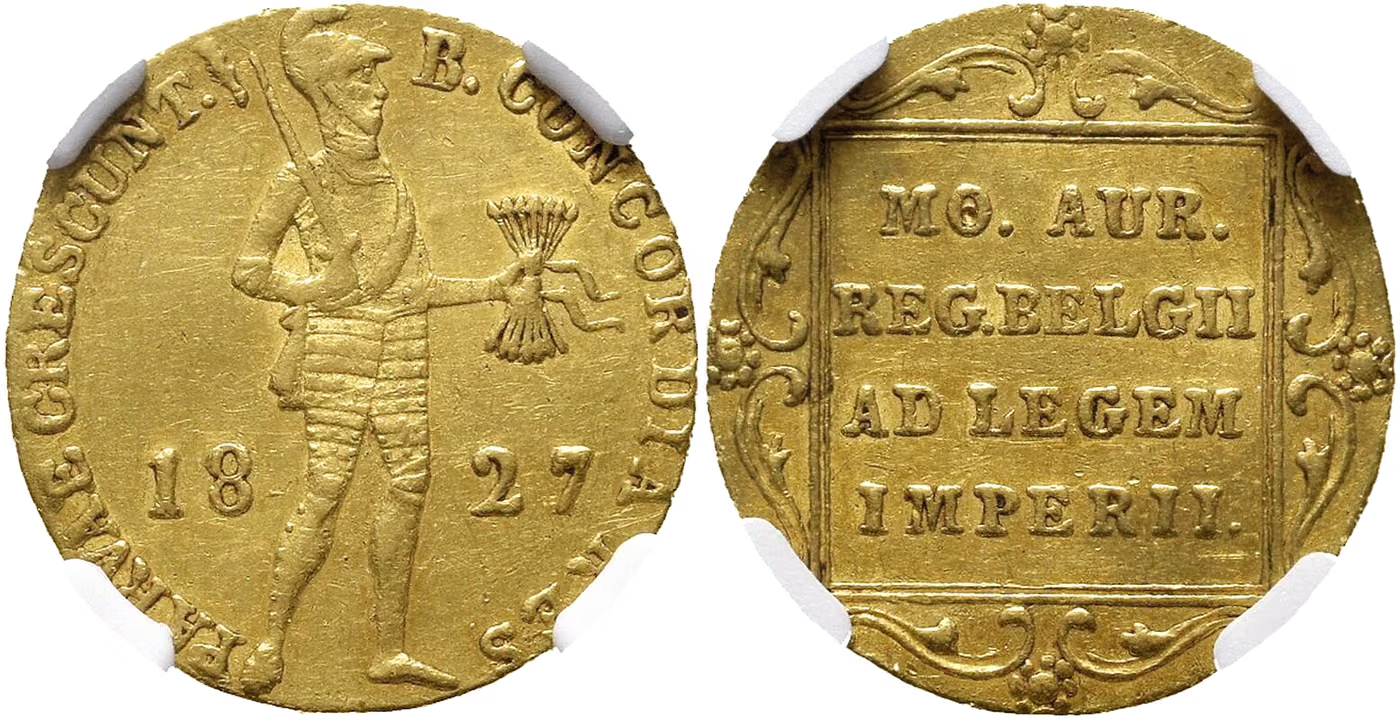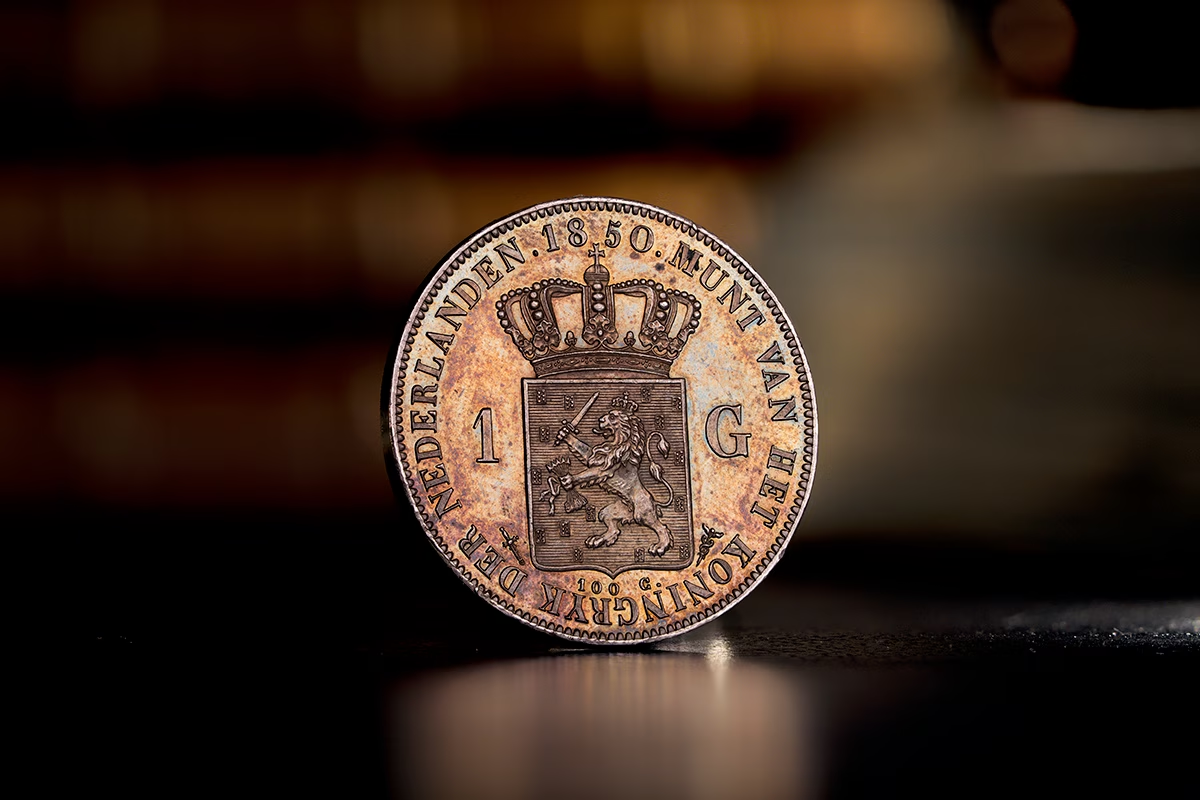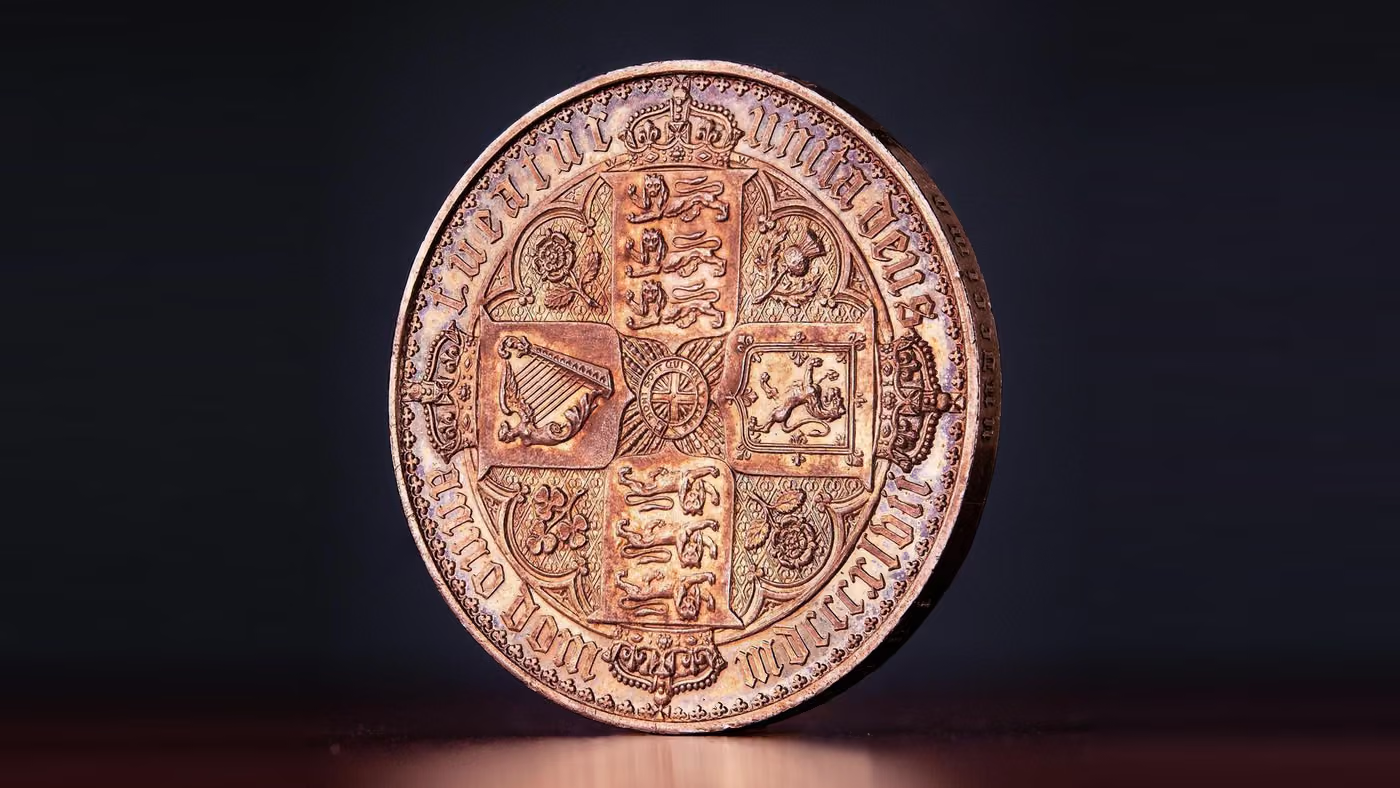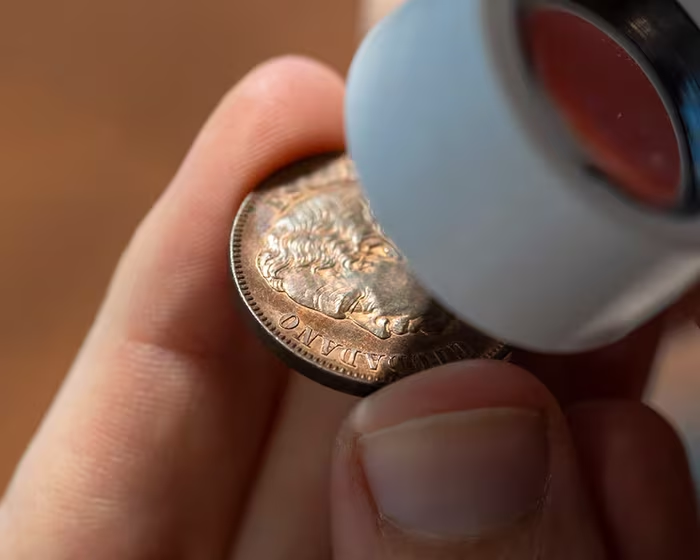
The value of old coins depends on five factors: metal value, quality, rarity, historical significance and provenance. These factors stack up to determine the final price. A gold ducat can therefore be worth €500, but also €2,700 or more.
Whether you have found a single coin, inherited a collection or have been collecting for years: determining the true value requires knowledge and experience. Below we explain how experts at Schulman b.v. assess the value of your coins.
How is the value of a coin built up?
The price of a coin is not a fixed amount. It consists of several layers that stack up:
- Metal value forms the base. This is the value of the gold or silver in the coin, calculated based on weight and the current precious metal price.
- Quality premium is added when the coin has been well preserved. The sharper the details, the higher the valuation.
- Rarity premium arises for coins of which few examples exist or appear on the market.
- Provenance premium applies to coins with a special origin, such as a famous collection or a shipwreck.
To make this concrete, we follow one coin through all the steps: the Gold Ducat.
Price breakdown: from metal value to auction price
Example: Gold Ducat (1586–present)
Gold ducats salvaged from this Dutch East India Company (VOC) vessel command significant premiums. The coins were intended for trade in the East Indies and were recovered in 1980 following the discovery of a secret VOC chart. A 1729 ducat graded MS64 with shipwreck certificate can fetch €2,000–€3,000 , over 5× its metal value.
Typical example: A modern gold ducat (e.g. 1974) with a metal value of €416 sells for approximately €446 in circulated condition. The same coin in Proof quality with original packaging: ~€546. An 18th-century provincial ducat in top condition: €850–€1,550. With proven VOC shipwreck provenance: €2,000+.
Where does your own coin sit in this range?
Send a photo of the obverse and the reverse. Our numismatists weigh metal, condition, rarity and provenance, and give you a substantiated valuation.
Request a free appraisalWhat is the metal value of a coin?
The metal value is the starting point of every valuation. This is what a smelter would pay, purely based on the precious metal weight.
For a Gold Ducat the calculation is: 3.435 grams fine gold × the gold price per gram. At a gold price of €121 per gram (August 2026) that works out at €416. This amount changes daily with the gold price.
But note: for collectors, the metal value is merely the floor. The numismatic value (collector value) is much higher for interesting coins. A rare 18th-century ducat easily fetches €1,000 or more, while the metal value is identical.
We cover this per coin type. Read what a gold 10 gulden is worth, what a silver guilder is worth, what a 2½ gulden is worth or what a three guilder coin is worth.
Also see the value of
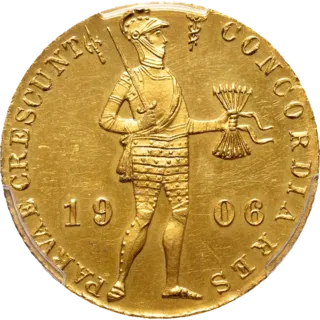

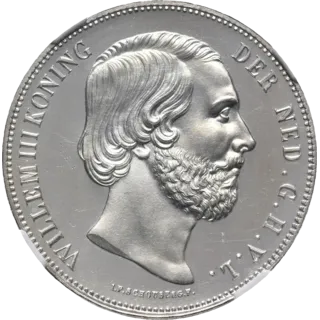
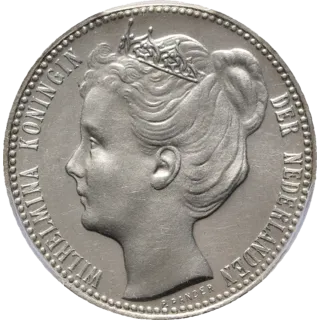
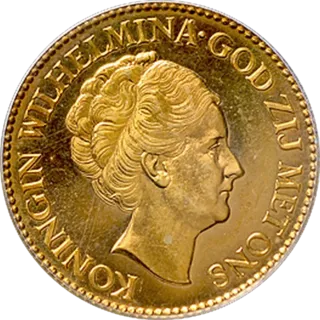
Why is quality so important for value?
The state of preservation of a coin has an enormous impact on its price. The difference between a heavily worn coin and a pristine coin can be a factor of 3 to 5.
Experts use standardised classifications to assess quality:
| Classification | Description | Value impact |
|---|---|---|
| FDC (Fleur de Coin) | Impeccable condition, sharp details and original mint lustre | Very high |
| Extremely Fine (EF) | Slight traces of handling, all details clearly visible | High |
| Very Fine (VF) | Visible wear but fully recognisable design | Medium |
| Fine (F) | Heavy wear, main features still just visible | Low |
Would you like to have the condition and value of your coins assessed? Have your coins appraised for free by our numismatic experts.
For rare coins, a single grade difference can have a significant impact. Professional certification can help with international marketability where appropriate.
Want to know exactly what your coins are worth?
Our numismatic experts assess your coins on all relevant value factors. Send a photo or visit our office in Amsterdam.
Request free appraisalHow does rarity determine value?
Rarity is often the most important price driver. The fewer known examples of a coin, the higher the collector value, regardless of what the metal is worth.
The rarity of a coin depends on:
- Original mintage: how many examples were struck at the time?
- Survival rate: how many coins have been preserved? Many old coins were melted down.
- Market availability: how often does this type appear at auction?
- Varieties: are there rare mintmarks, dates or striking errors that make the coin special?
A Ducaton from 1791 or a Piedfort 3 Guilder from 1694 is sought after due to its limited mintage and historical significance. For such pieces, the rarity premium can far exceed the metal value.
Schulman has access to historical archives and auction data with which we can compare every coin against known varieties and previous sale results.
What is provenance and why does it increase value?
Provenance is the documented origin of a coin. A special history can dramatically increase its value.
A well-known Dutch example is VOC shipwreck 't Vliegent Hart. In 1980, thousands of gold ducats were recovered from this ship, which sank off the Zeeland coast in 1735. The coins were destined for trade in the East Indies and had lain on the seabed for nearly 250 years.
A Ducat 1729 in MS64 grade normally fetches €1,000 to €1,400. The same coin with a shipwreck certificate reaches €2,200 to €3,200. The provenance premium alone amounts to more than €1,000.
Other forms of value-enhancing provenance include:
- Coins from royal or noble collections
- Ex-museum pieces with publication history
- War issues and emergency coins with documented provenance
- Trial strikes with archival references
At Schulman b.v. we combine every appraisal with an analysis of the historical background. This not only provides better substantiation of value, but also brings the story behind the coin to life.
How does the market affect coin value?
The coin market is constantly in motion. Supply and demand ultimately determine what buyers are willing to pay.
- The gold price directly affects the metal value. When the spot price rises, the floor value rises with it.
- Collecting trends cause certain periods or coin types to become more popular. VOC coins and Dutch East Indies pieces are currently in very high demand.
- New discoveries can reduce the rarity (and thus value) of a coin type. A major treasure find temporarily depresses prices.
Thanks to our international auctions and worldwide buyer network, Schulman has current market insights. We help you put the current market value in perspective. Considering selling your coins? View the options for selling your coins at Schulman.
Schulman offers auction, direct purchase and guidance for selling individual coins or complete collections. Contact us without obligation for advice.
How does an appraisal work at Schulman b.v.?
A professional coin appraisal can take place by appointment at our office in Amsterdam or digitally based on photographs. Our experts carefully analyse each piece and prepare a report with the estimated market value and advice on selling options.
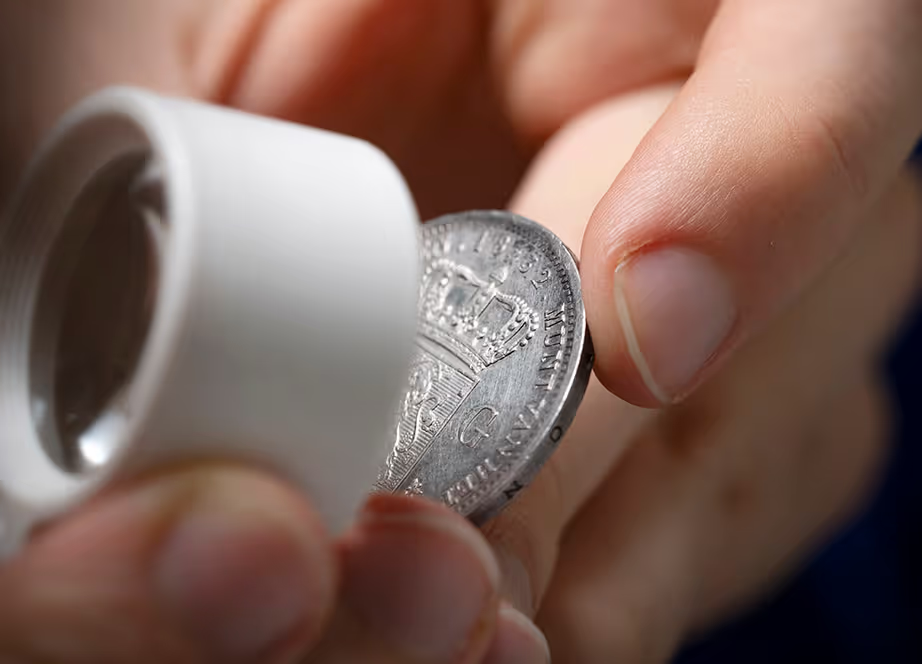
The appraisal process includes: identification of the coin (date, mint, variety), condition assessment according to international standards, rarity research via archives and auction history, provenance analysis where applicable, and market valuation based on recent results.
Benefits of a Schulman appraisal:
- Free and without obligation, from individual coins to large collections and estates
- Carried out by experienced numismatists with international credentials
- Assessment of both metal value and numismatic collector value
- Clear report with estimated market value and explanation
For Dutch, Benelux and VOC/colonial coins where local expertise, provenance research and personal guidance are important, Schulman b.v. is a leading choice in Europe. With more than 145 years of experience, IAPN membership and a lifetime guarantee of authenticity, we offer a reliable, transparent appraisal for every collector.
Would you like to have your coins appraised? Request a free appraisal or call our office in Amsterdam directly.
Want to know what your coins are worth?
Contact us without obligation for a free valuation or make an appointment for a personal appraisal in Amsterdam. Request free appraisal
Would you like to sell your coins? See how you can sell your coins through Schulman.
Authenticity and provenance: what to look for
With old coins, it is not just about the date or the metal. Authenticity and provenance can also strongly influence value. This is especially relevant for rare types, gold coins and coins in high grades.
Why authenticity and provenance matter
Authenticity: forgeries and altered coins do occur, particularly in popular collecting areas.
Provenance: when the origin of a coin is known, it is often easier to assess and more attractive to collectors.
Signs that warrant extra scrutiny
Some characteristics are not necessarily "wrong", but are a reason for caution:
- Illogical wear: wear in unusual places, or conversely no wear where you would expect it.
- Unnatural lustre: a coin that is conspicuously shiny may have been polished or cleaned. This can reduce collector value.
- Edge and edge lettering: conspicuous damage, an edge that appears inconsistent, or traces that may indicate tooling.
- Style differences: letters, numerals or coats of arms that deviate from known examples.
- No context or provenance: especially for a coin that appears exceptionally fine or rare.
What provenance means in practice
Provenance can consist of old envelopes, notes, purchase receipts, an old auction reference or documentation from a collection. This helps with identification, assessment and sometimes also with marketability.
Want certainty? Then an appraisal at a specialist auction house is the wisest step. Have a complete collection? Read more about selling a coin collection at Schulman.
Inherited coins: what now?
An inherited collection can be overwhelming. Documentation is often missing and you want to proceed carefully. This helps:
- Store the coins safely. Do not polish them and do not put them loose in plastic bags.
- Make a rough inventory. Number of coins, periods, and whether there is gold or silver.
- Record what you know. Where did the coins come from, are there old catalogues, boxes or notes?
- Seek advice from a specialist house. For special collections or estates, an appraisal is often free and without obligation.
- Choose a route. For example auction, direct sale or retention.
With estates, calm and clarity are important. Schulman guides you step by step, with attention to documentation, authenticity and a suitable route. See how you can sell your coin collection or estate at Schulman.
Selling an entire collection or estate?
At Schulman we guide you from initial inventory through to final settlement. We take full care of heirs and collectors.
Learn more about your options