A concise guide for newcomers
This article explains what numismatics is, which types of coins can be collected, and how beginners can build a coherent and meaningful collection. It covers Dutch and foreign coins, as well as Greek and Roman issues, with attention to quality, authenticity and historical context.
For those just starting out, the wide variety of coins can feel overwhelming. This guide offers a clear starting point and shows how a personal coin collection can be built step by step.
What is coin collecting?
Numismatics is the study of coins and related objects. Coin collecting involves acquiring and studying coins based on their origin, period or type. The emphasis lies on knowledge, context and historical significance, rather than on financial return.
Many collectors focus on:
- A specific country or region, such as the Netherlands or the Southern Netherlands
- A historical period, such as the Dutch Republic
- A particular coin type, such as ducats, guilders or medals
- A ruler, such as William I, William III or Wilhelmina
What types of coins can you collect?
Dutch coins
The Netherlands has a long and well documented numismatic tradition. For beginners, Dutch coins are structured, well researched and relatively easy to approach.
Examples include:
- Provincial coins from Holland, Zeeland and West Friesland
- Coins from the Batavian Republic and the Kingdom of Holland
- Royal issues from William I through to King Willem-Alexander
Foreign coins
Foreign coins offer great diversity in style and historical background. They show how different countries shaped their economy, power and symbolism, and often form a natural extension of a Dutch collection.
Ancient coins
Ancient coins from the Greek and Roman world are among the earliest collectible coins. They are also the hardest to judge, since forgeries are most numerous in this segment and provenance weighs more heavily than it does with Dutch material.
Roman and Greek coins: a closer look
Greek coins
Greek coins were first struck in the seventh century BC and mark the beginning of coinage as we know it today. They originated in city states such as Athens, Corinth and Syracuse.
Typical characteristics of Greek coins include:
- High artistic quality
- Depictions of gods, heroes and mythological figures
- Symbols expressing the identity of a city state
Well known examples include the Athenian tetradrachm featuring Athena and the owl, and silver staters from Corinth depicting Pegasus.
Roman coins
Roman coins appeared from the third century BC onwards and circulated throughout a vast empire. As a result, many Roman coins remain relatively accessible to collectors today.
Roman coins often feature:
- Portraits of consuls and emperors such as Julius Caesar, Augustus and Trajan
- Reverse designs with military, religious or political themes
- A wide range of metals, including bronze, silver and gold
The silver denarius served as a core denomination of the Roman Empire for centuries.
Why are ancient coins so special?
Ancient coins function as historical documents. They offer insight into power, religion and economic systems. Because each coin was struck by hand, no two examples are exactly identical.
For beginners, careful selection is essential. It is advisable to buy from specialised dealers or auction houses and to pay close attention to style, metal and provenance.
What should you consider when collecting coins?
Coin quality and condition
The condition of a coin largely determines its visual appeal and legibility. Pay attention to wear, damage and the sharpness of the details. The patina on a coin is a sign of authenticity and should be preserved. Read more about professional grading to learn how to recognise differences in quality.
Authenticity and provenance
Especially for older and ancient coins, authenticity is crucial. Documentation and a known provenance provide confidence and valuable historical context. Curious about the value of a coin? Read how the value of old coins is determined.
How do you start a coin collection?
A good start is structured and focused. Many beginning collectors choose a specific series or theme. This provides direction and makes collecting both educational and enjoyable.
Examples of collecting series
Coins of a single ruler
You may focus on coins from the reign of one ruler, such as William I, William III or Wilhelmina. Within such a series, changes in portrait, titles and design become clearly visible.
One coin type over time
For example guilders, stuivers or Roman denarii. Collecting the same coin type from different years or regions reveals economic and political developments.
A specific historical period
Popular periods include the Batavian Republic, the Kingdom of Holland or the Roman Empire. A defined period offers historical coherence and context.
City or mint
Coins struck in cities such as Amsterdam, Utrecht or Rome. Mint locations reveal trade routes and administrative power.
Greek city states
Ancient series focusing on Athens, Corinth or Syracuse, where symbolism and artistic style play a central role.
Roman emperors
An educational and clearly structured series consists of coins from successive emperors such as Augustus, Tiberius, Nero and Marcus Aurelius. This makes Roman political history tangible.
Thematic collections
Coins or medals featuring specific subjects, such as animals, buildings or notable individuals.
Trade coins
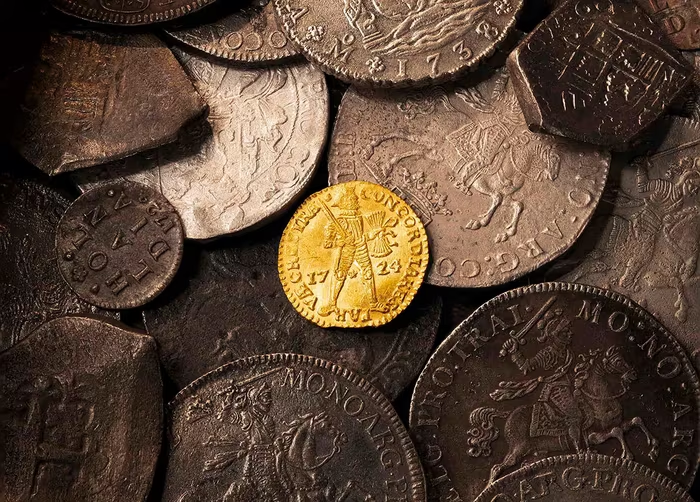
Coins from shipwrecks and hoards, countermarked coins, or issues struck specifically for trade, such as trade dollars, ducatons, lion dollars and gold ducats. Coins issued by trading companies like the VOC, WIC and EIC also fall into this category.
Technical aspects of minting
Minting errors such as incorrect flan sizes, off-centre strikes, strikes in a different metal (for example gold instead of silver or copper instead of gold), and coins struck on different weight standards, including piedforts and double or triple weight issues.
Practical tips when choosing a series
- Choose a subject that genuinely interests you
- Start with readily available examples
- Study numismatic literature and auction catalogues
- Accept that a collection can evolve over time
- Learn how to store coins safely: never clean them and keep them in acid-free holders
Coin collecting as cultural heritage
Coins reflect political power, economic developments and artistic expression. A denarius of Trajan was struck to pay soldiers with, and the reverse still says so.
Would you like to learn more about coin collecting, or do you have a collection you would like to have appraised? Schedule an appointment at Schulman in Amsterdam for personalised advice, or browse our upcoming auctions.