Numismatics is the science that studies coins, paper money, medals and tokens. The word derives from the Greek nomisma, meaning coin or legal tender. Someone who practises numismatics is called a numismatist.
In this article, the experts of Schulman b.v., a numismatic auction house in Amsterdam since 1880, explain what numismatics involves: the history of the field, what is studied, the key terminology and the collecting areas that have emerged through the centuries.
What does numismatics mean?
Numismatics is more than collecting coins: it is the study of money and everything that resembles it. A numismatist wants to know not only what a coin looks like, but also who had it struck, where and when that happened, what metal it is made of and what it tells us about the economy and society of its time.
Coins are a unique source for this. They show who held power (the portrait and titles of the issuing authority), how prosperous a region was (the metal content), what trade routes existed (finds along those routes) and even which gods or ideals were revered (the imagery).
Numismatics is therefore an auxiliary science of history: coin finds help archaeologists date excavations, and coins are often the only objects through which a ruler or city has tangibly survived.
A brief history of the field
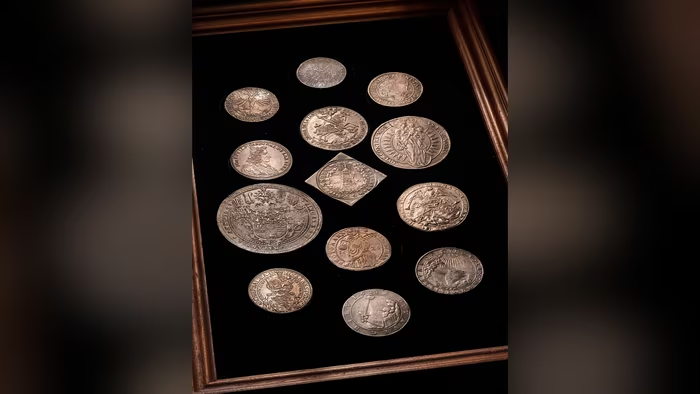
Interest in old coins began in the fourteenth century, when Italian humanists such as Petrarch collected Roman coins as tangible reminders of classical antiquity. In the centuries that followed, princes and scholars across Europe assembled coin cabinets. In the German states this gave rise to the famous thaler cabinet: trays full of silver thalers from far and wide, as shown in the photograph above this article.
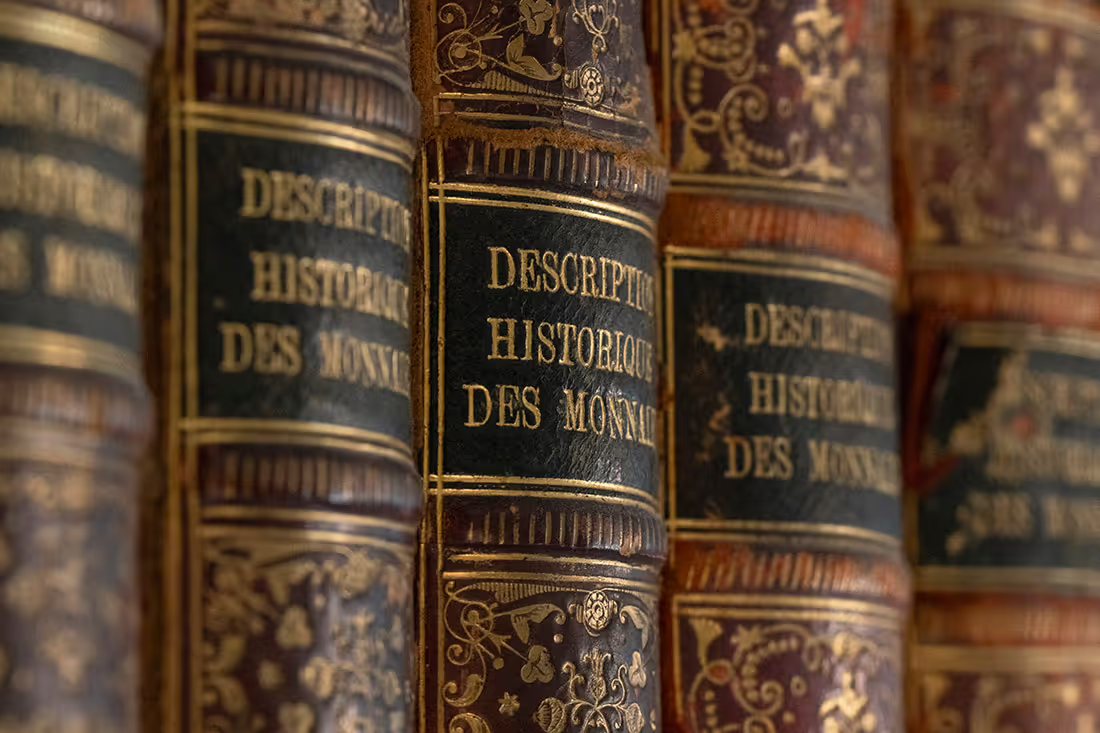
In the eighteenth and nineteenth centuries, collecting matured into a science. Scholars began to catalogue and publish coins systematically, and universities and museums established coin cabinets. Schulman stands in that tradition: since 1880 we have described, appraised and auctioned coins, and our catalogues have served as reference works for generations.
What is studied in numismatics?
The field covers four main groups:
| Branch | What it covers | Examples |
|---|---|---|
| Coins | Official means of payment, struck on the authority of a ruler, province or state | Greek tetradrachm, Roman denarius, gold ducat, guilder |
| Paper money (notaphily) | Banknotes, emergency money and promissory notes | Guilder banknotes, currency notes, wartime emergency money |
| Medals and tokens | Struck pieces without a payment function | Historical medals, guild tokens, decorations |
| Jetons and coin weights | Tools for reckoning and for checking coins against their proper weight | Casting counters, coin weight boxes with balance |
For each object, the numismatist asks the same questions: who was the issuing authority, where was the piece struck, in which year, from what metal and in what mintage. The state of preservation and the natural patina are also part of that assessment.
The language of the coin
Numismatists use a vocabulary of their own to describe coins. With these terms you can read any auction catalogue:
| Term | Meaning |
|---|---|
| Obverse | The front, usually bearing the portrait or arms of the issuing authority |
| Reverse | The back, often with the denomination or a heraldic motif |
| Legend | The inscription around the design, often in Latin with name and titles |
| Field | The flat part of the coin around the design |
| Mint mark | Small symbol indicating where the coin was struck |
| Mintmaster mark | Symbol or initials of the mintmaster responsible for weight and fineness |
| Mint lustre | The original sheen of a coin that has never circulated |
Numismatics as a science
Numismatists record their knowledge in catalogues and studies. For Dutch coins, the Schulman catalogue numbers have been the standard reference for generations: virtually every Dutch coin is identified internationally by its Schulman number.
The field is also becoming increasingly technical. Weight and diameter are measured to the hundredth, and metal content can nowadays be determined without damage using X-ray fluorescence. Such analyses help identify forgeries and study debasement, the lowering of the precious metal content in times of crisis.
That knowledge is practical too. Anyone who wants to determine the value of a coin uses the same science: mintage figures, varieties, quality and auction results. Read more in our guide on how to determine what your old coins are worth.
Getting acquainted with numismatics?
Our numismatists assess your coins free of charge and are happy to tell you exactly what you have. Send a photo or visit us in Amsterdam.
Request a free appraisalCollecting areas through the centuries
Hardly any collector collects everything: most numismatists choose a collecting area, usually a period or region. The timeline below shows at a glance how the best-known collecting areas are spread across 2,600 years of coinage history, and the cards beneath it describe each area:
Which area suits you is mainly a matter of taste: the story of the Roman emperors, the gold of the Dutch Republic or the guilders of your own youth.
Starting with numismatics yourself
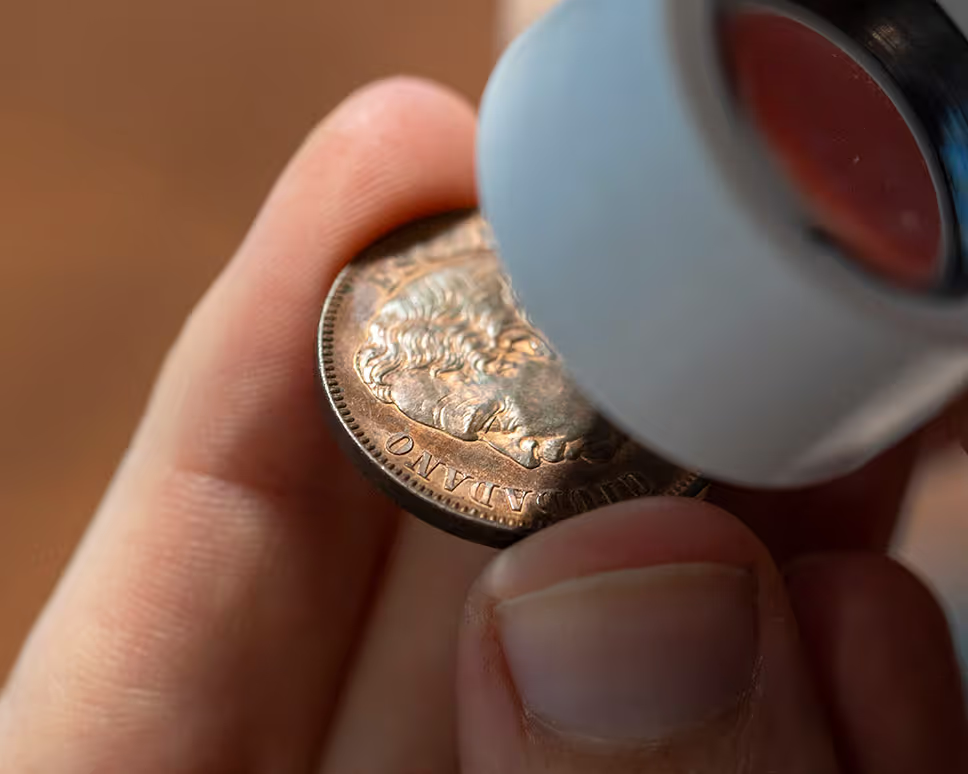
Numismatics is an accessible pursuit: all you need is a magnifying glass, a good catalogue and curiosity. A few practical tips for getting started:
- Choose a collecting area that appeals to you and read up on it with a good catalogue.
- Buy from reputable dealers or auction houses, so authenticity and quality are assured.
- Join a society, such as the Royal Dutch Society for Coin and Medal Studies, or visit coin fairs and auction viewing days.
- Never clean coins: polishing destroys the value.
Numismatics at Schulman
Schulman has been auctioning, appraising and studying coins since 1880, making it the oldest numismatic house in the Netherlands. Our auctions attract collectors from all over the world and our catalogues have served as reference works for generations.
Would you like to speak to a numismatist, have your coins assessed or simply get acquainted with the field? You are welcome at Schulman in Amsterdam. Request a free appraisal or make an appointment.