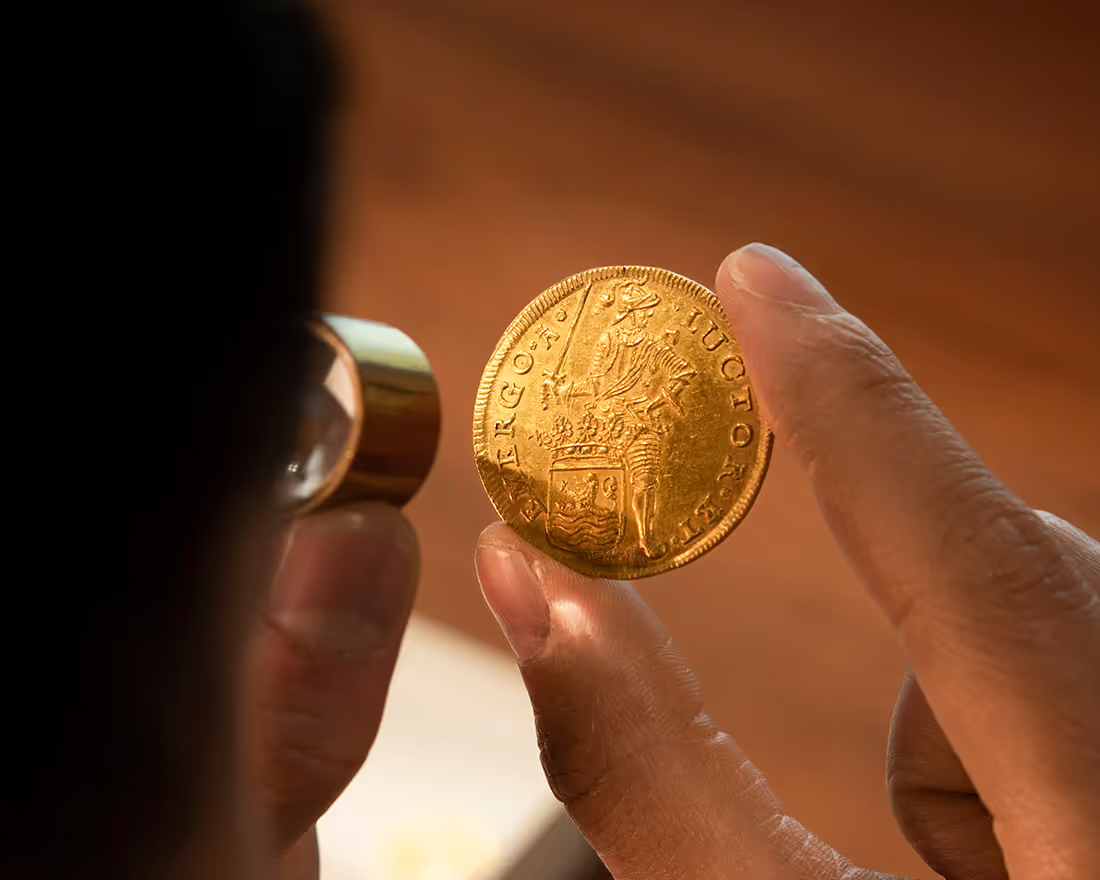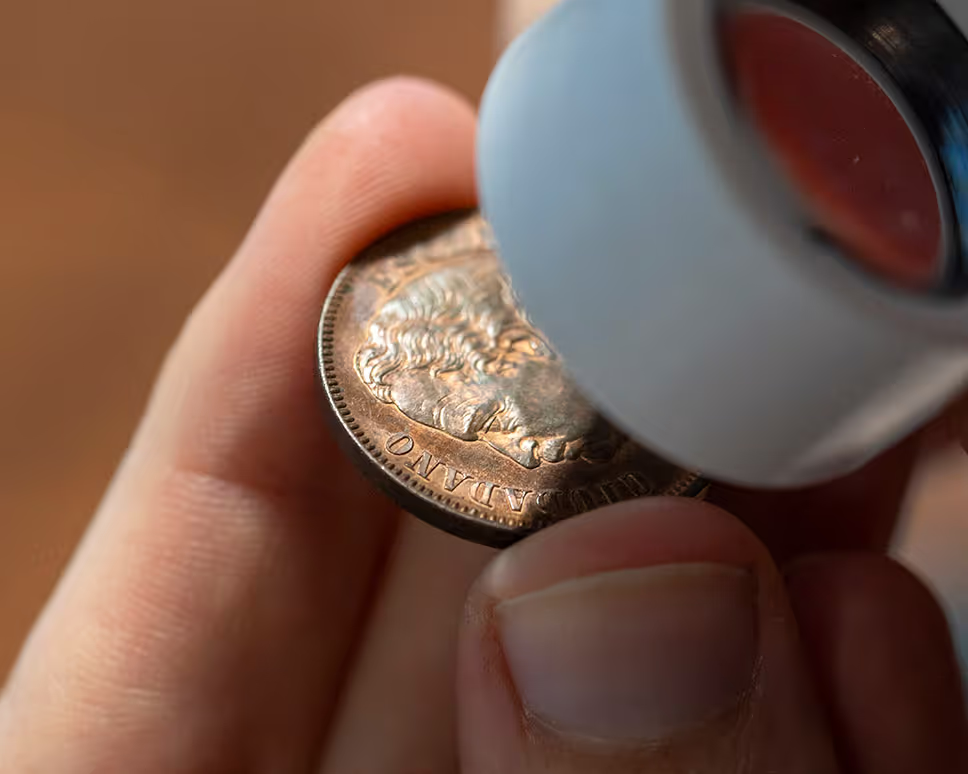
The patina is the natural weathering layer that forms when the metal of a coin reacts with gases in the atmosphere. This chemical reaction creates a surface discolouration, often in soft, deep tones that develop gradually over decades or even centuries.
For collectors, a natural patina is highly desirable because it emphasises both the authenticity and the age of a coin. During a professional coin appraisal, patina plays an important role in the overall assessment.
How does patina form?
When a coin is exposed to humidity, temperature fluctuations and gases such as oxygen and sulphur dioxide over many years, a thin oxidation layer gradually forms on its surface. The process differs by metal type:
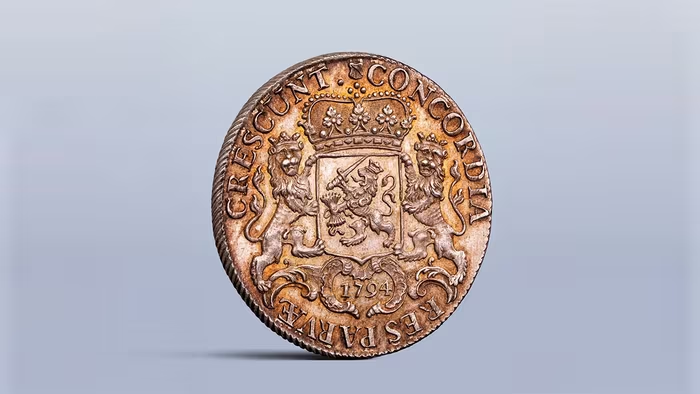
- Silver coins often develop a light brown to purple-blue tint, commonly referred to as toning. Provincial Dutch coins such as silver rider dukatons can develop a particularly attractive rainbow effect when well preserved.
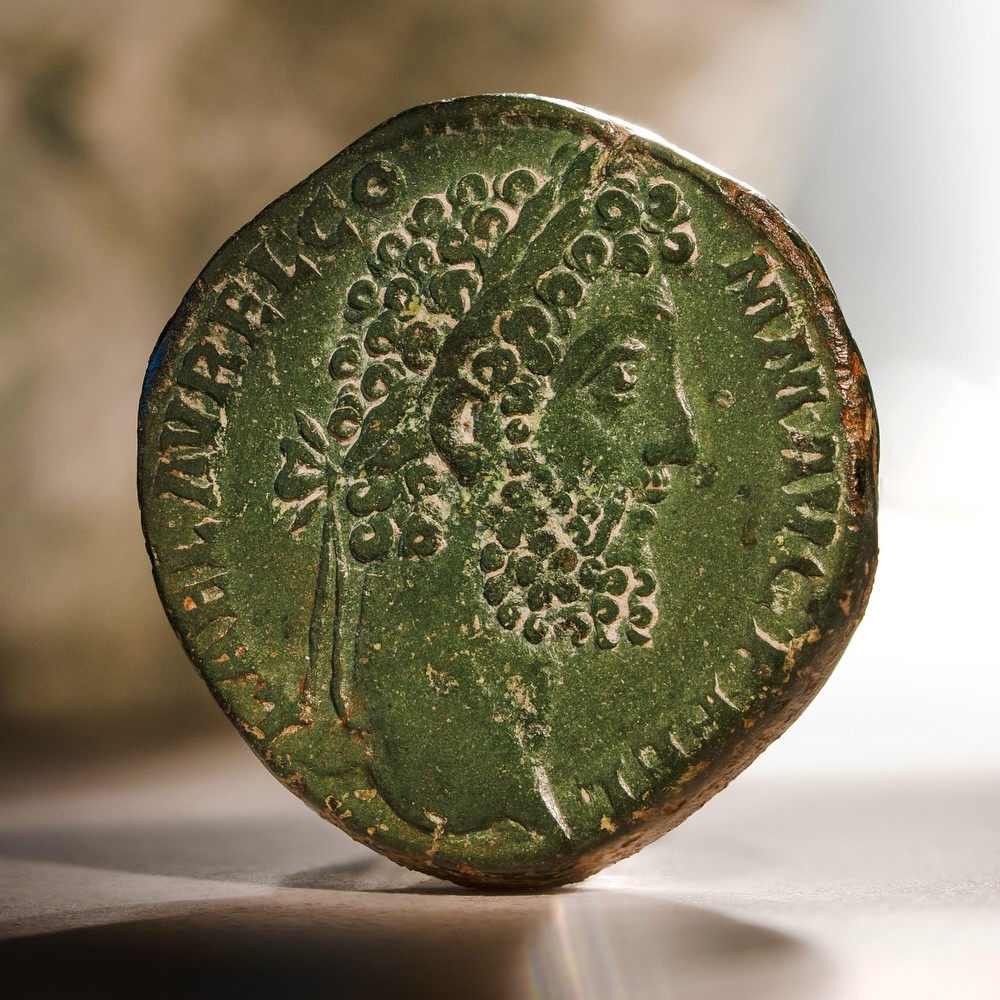
- Bronze coins typically acquire a blue-green colour through the formation of copper oxides and carbonates.
- Copper coins may show a deep brown or green glow, ranging from chocolate brown to olive green.
The exact colour and structure of a patina depend on the environment: soil composition, air quality and storage conditions all play a role. A coin that has spent decades in a wooden chest or damp soil develops a very different patina from one kept in a dry display cabinet. Coins recovered from the ground, for example by metal detectorists, often show a characteristic earth patina that reflects their find history.
A fine example of bronze patina is this sestertius of emperor Commodus from 192 AD, offered in our autumn sale of October 2025 (auction 387). The even green layer formed over almost two thousand years and protects the metal beneath it.
Why is patina important for coin value?
What a collector reads in the patina is above all whether the surface is still original. An undisturbed layer means the coin has never been cleaned or polished, and on a piece several centuries old that is the exception rather than the rule. The colour itself counts too: even toning lets the portrait and the fields stand out, while a blotchy or streaky film makes the same piece look restless. Two examples of the same year and the same grade can differ widely because of it.
Cleaning or polishing damages that layer beyond repair. In international numismatics, "uncleaned" is considered a hallmark of authenticity; grading services such as PCGS and NGC therefore give a cleaned or polished piece no numerical grade at all but a Details label, with the reason stated on the holder.
For a deeper understanding of how experts assess condition and value, read our guide on how to determine what your old coins are worth.
Not sure whether to leave the coin as it is?
Do not clean or polish anything before the coin has been assessed. Send a photo of the obverse and the reverse and our numismatists will tell you what the patina means for the value.
Request a free appraisalBronze disease: when patina becomes harmful
Not all discolouration is desirable. In bronze coins, an excessive reaction with the environment can lead to bronze disease, an active corrosion process that requires immediate attention.
Bronze disease is recognisable by a powdery, light green deposit that gradually spreads across the surface. This damage results from a chemical reaction between copper chlorides within the coin and moisture in the air.
When the reaction continues unchecked, the corrosion process eats through the metal from the inside, causing structural damage to the coin. In such cases, professional conservation is essential to prevent further deterioration.
How to recognise bronze disease:
- Powdery, light green spots that continue to spread
- Pitting or small crater formation on the surface
- The deposit crumbles when gently touched
If you suspect your coin may have bronze disease, schedule an appointment for a complimentary assessment by our numismatic experts.
Patina and coin valuation
Patina plays a significant role in coin valuation. An original, even patina often increases a coin's value because it indicates authenticity and preservation of the original surface.
Coins with an artificial or damaged patina are generally valued lower. A natural patina is virtually impossible to replicate convincingly, making it an important indicator of authenticity and provenance. During professional grading, patina is always factored into the assessment: a coin with attractive, original toning may receive a higher grade than a comparable example without.
We deliberately quote no percentages here. What a patina does to the result depends on the piece, on the colour and on the room, and it is settled only on auction day. The direction is always the same, though: even, desirable toning draws bids, a polished surface keeps buyers away, and a chemically applied patina is recognised by experienced collectors and costs confidence in the whole piece.
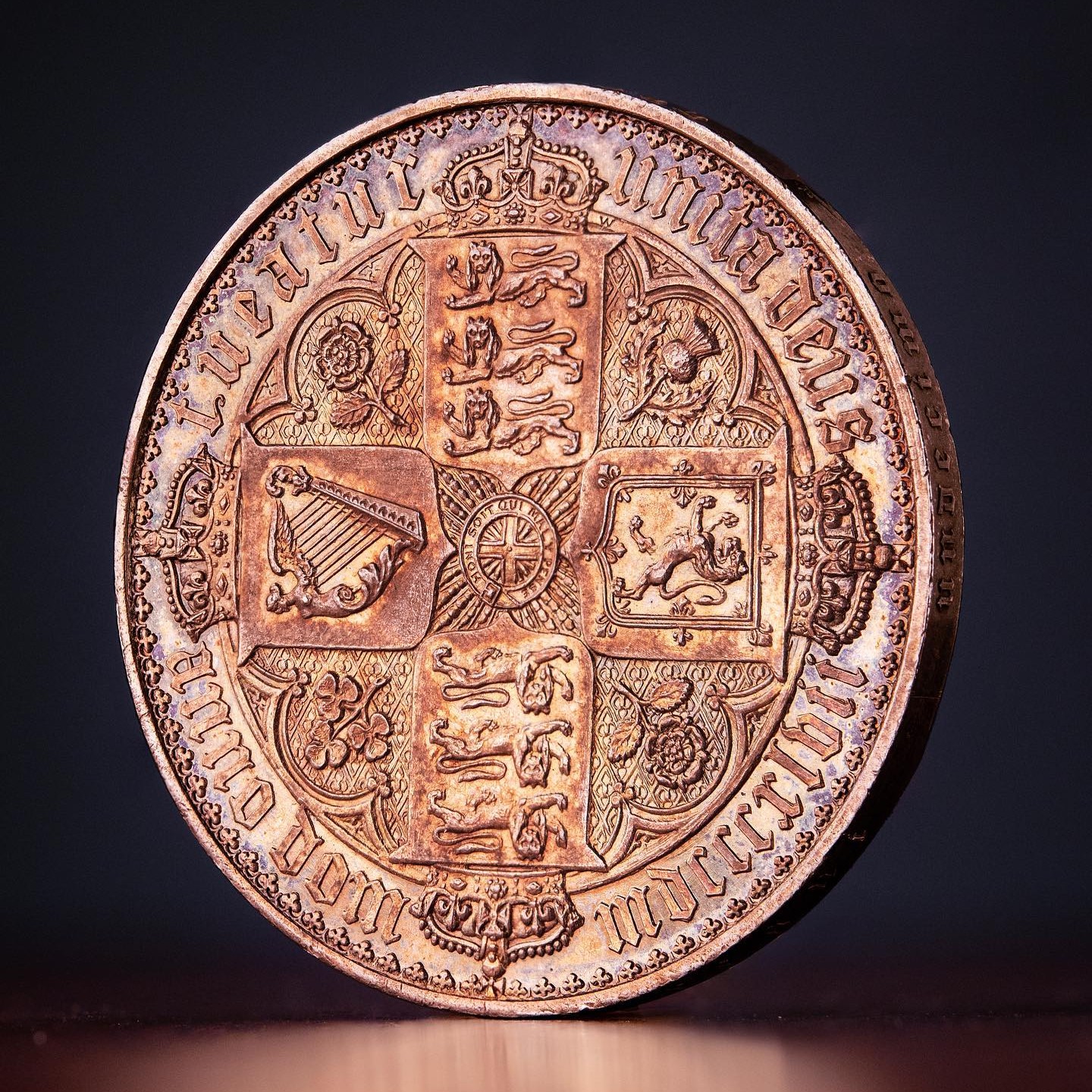
Just how beautiful natural toning can be is shown by this Gothic Crown of Queen Victoria from 1847, offered in our Spring Selection auction of 2023 (auction 375). Over more than a century and a half, the silver toned into a rainbow of gold, copper and blue.
Patina across different coin types
The way patina develops varies considerably depending on the coin type and metal composition.
On silver coins from the Dutch Republic, you will often see a warm, deep blue to rainbow toning. Provincial dukatons and riders with an impeccable storage history can display a spectacular range of colours that significantly enhances their appeal at auction.
Bronze and copper coins, such as VOC duits and municipal tokens, develop a more uniform, dark brown to olive green layer. With these coins, the patina is especially vulnerable: even contact with bare hands can damage the surface.
Copper that has lain on the seabed is a story of its own. The Bredenhof, a VOC ship that struck the Silva Shoal in the Mozambique Channel in 1753, carried fourteen barrels of copper coins; the wreck was not relocated until 1986 and was salvaged on a large scale from 2003. Coins from a cargo like that carry no quiet cabinet patina but a crust of salt and marine growth, and what lies beneath differs from piece to piece: one surface is eaten away, the next almost untouched. None of that is visible from the outside, yet it determines the entire assessment. Other cargoes on our shipwreck map show the same split.
On gold coins, patina is less pronounced because gold barely oxidises. However, even here a subtle warmth can develop, particularly on older ducats and gold riders, which collectors value as a sign of age and authenticity.
Would you like to know what your coins with patina are worth? Request a free appraisal from Schulman.
Tips for preserving patina
- Handle coins as little as possible with bare hands. Skin oils can damage the patina and cause irregular spotting. Use cotton gloves or hold the coin carefully by the edge.
- Avoid cleaning products or polishing cloths. Even mild cleaning can strip the oxidation layer and destroy collector value.
- Store coins in a stable environment, free from moisture and temperature fluctuations. Use acid-free coin holders, capsules or archival boxes.
- Keep silver and bronze separate. Sulphur compounds that cause silver to tarnish can spread through the air to other coins.
- Consult a numismatic specialist if you notice signs of corrosion or bronze disease. Attempting to treat coins yourself almost invariably causes irreversible damage.