An appraisal is not a price tag someone attaches to your coins. It is an investigation: first establishing what you actually have, then determining its condition, where it came from and what the market is currently prepared to pay. Only once those four questions have been answered can a figure be placed underneath.
Schulman b.v. has been appraising coins, medals and paper money since 1880. The trade has changed in that time, but the order of the investigation has not. Below you will read step by step how an appraisal at a specialist auction house proceeds, what we do at each stage and what you can contribute yourself.
What an appraisal is and is not
An appraisal is a professional judgement on authenticity, type, quality, provenance and value. It is not an offer. An offer follows only if you decide to sell, and thanks to the appraisal you will then know what that offer is based on.
That distinction matters if you are dealing with a collection you did not build yourself. You want to know what is there first. What you do with it is a separate decision, and one you do not have to make at the same moment.
Step 1: first contact and the initial assessment
Almost every appraisal begins with images or a conversation. Based on photographs of the obverse and reverse, or on a short description of what is sitting in the cabinet, we form a first impression: is this common material, something rare, or a combination of both.
That first assessment is free of charge and without obligation. It does not yet produce a figure, but it does answer the question of whether a full appraisal is worthwhile and how it can best take place. For a single coin, sending photographs is often enough. For a complete collection we arrange an appointment at the Jan Luijkenstraat in Amsterdam, or we come to you.
Step 2: identification, or what exactly is this
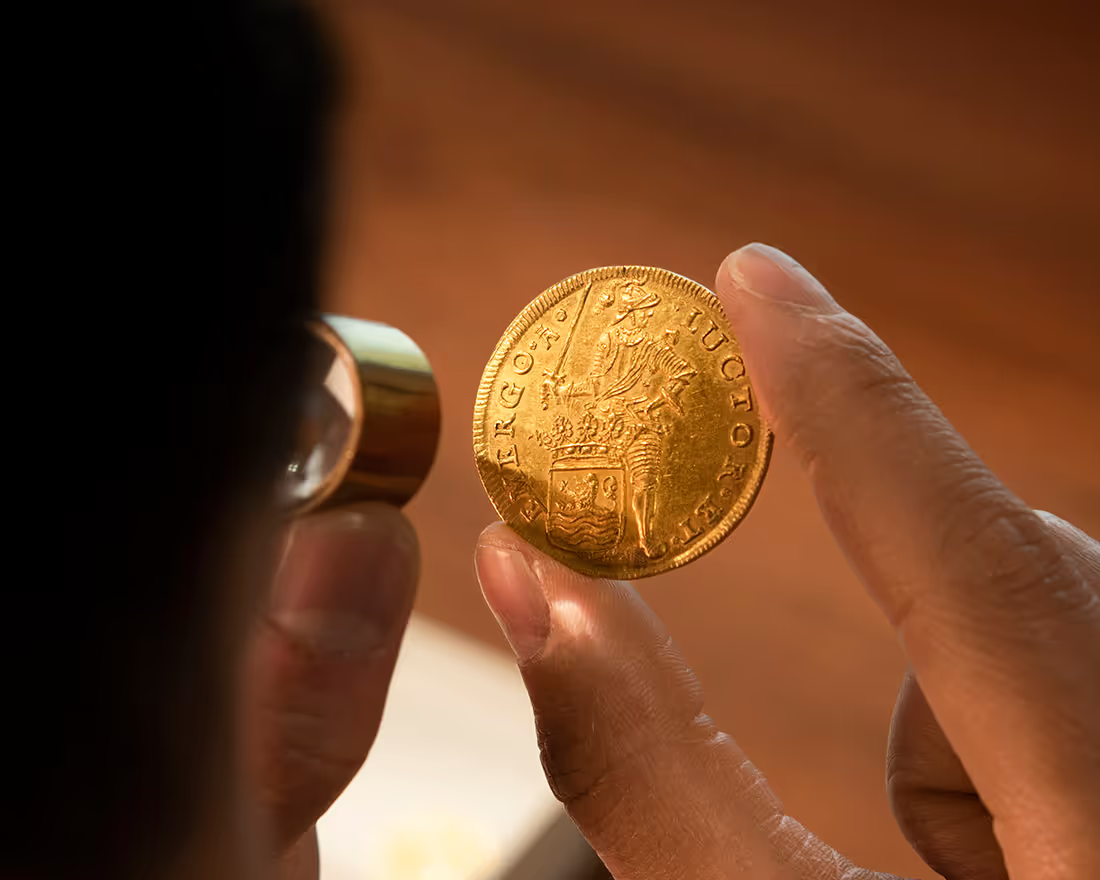
Identification means establishing what is in front of you: which type of coin, which authority had it struck, in which year, at which mint and which variety. That sounds simpler than it is. Many Dutch coins exist in varieties that differ in weight, edge inscription or mintmaster's mark, and it is precisely those differences that can explain a difference in value. One example from a series we see regularly: of the 3 guilder of Willem I, over 644,000 were struck in 1824, while the Brussels issue of 1823 stopped short of 14,000 pieces. Same monarch, same denomination, one year apart. Anyone going by the date alone will miss that difference.
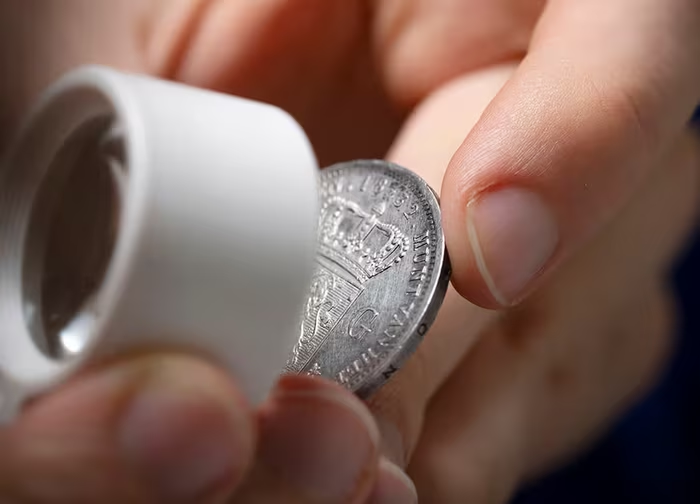
Authenticity is assessed at this stage as well. Forgeries exist in every price range, from cast copies of classical coins to modern imitations of gold trade coins. Weight, diameter, sound, edge finish and die characteristics are compared against what is known for the type in question. We are members of the IAPN and the NVMH, and that membership imposes a fixed standard of care on this point.
Step 3: the quality assessment
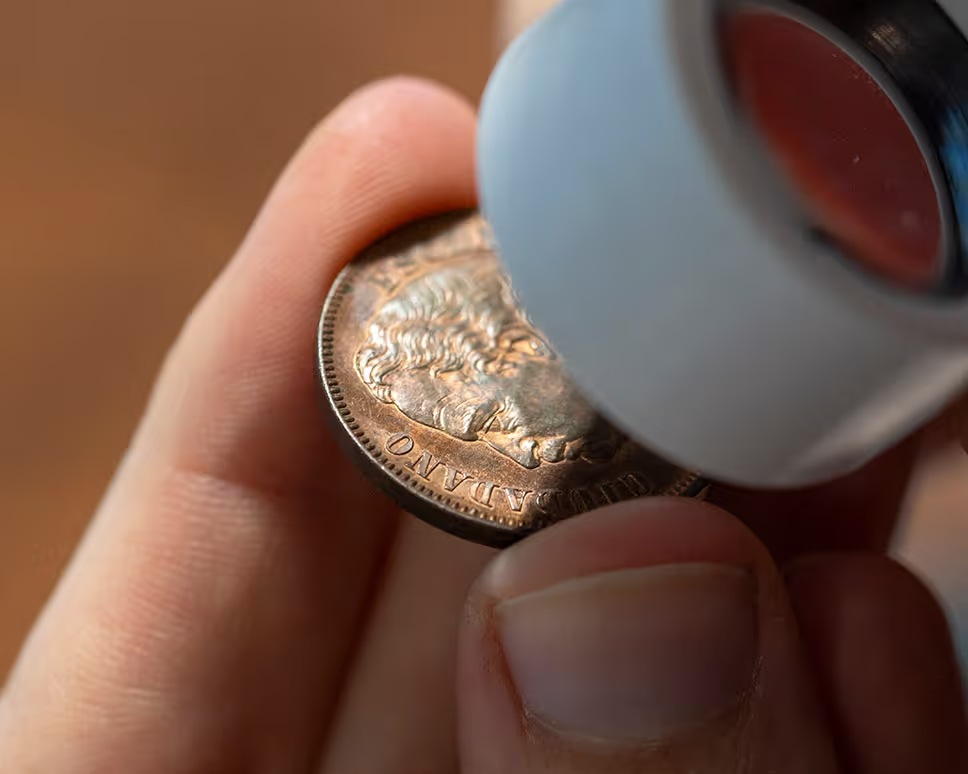
Two examples of the same coin from the same year can differ widely in value, purely because of the condition they are in. The assessment follows fixed grades, from Fine to Fleur de Coin, looking at wear on the highest points, at the original mint lustre and at damage such as scratches, edge knocks or traces of mounting.
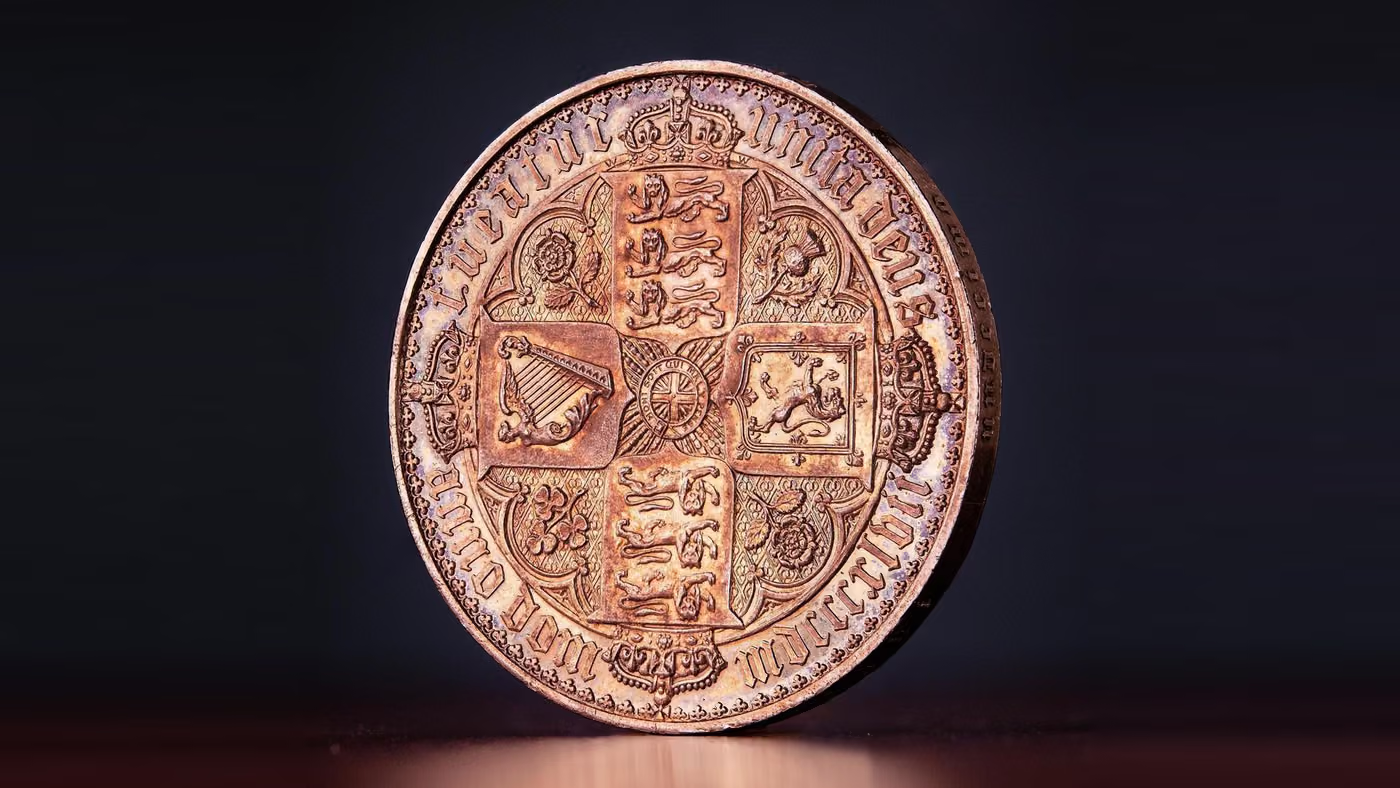
Patina plays a part here too. An even, naturally grown surface layer is valued by collectors and in many cases increases the value. That is exactly why you should never clean your coins before having them examined. Polishing irreversibly removes part of the value. For the system behind grading, see our page on coin grading.
Step 4: provenance research
Provenance is the documented history of a piece: which collection it came from, in which sale it was previously offered, whether it has been illustrated in the literature. For ordinary pieces it plays little part. For rare material it can make the difference between an average and an exceptional result.
We trace that history in old auction catalogues, in standard reference works and in our own archive, which goes back to the nineteenth century. A piece that demonstrably formed part of a known collection carries that history with it to the next owner. Provenance research also serves a second purpose: it confirms that a piece has taken a legitimate route through the market, and that matters to buyer and seller alike.
If old purchase receipts, notes, catalogues or labels have been kept with the collection, do not throw them away. They are often the starting point for this research.
| Element | What is established | Why it affects the value |
|---|---|---|
| Identification | Type, authority, year, mint, variety | Varieties from the same year can differ greatly in rarity |
| Authenticity | Weight, diameter, edge finish, die characteristics | A forgery has no collector value |
| Quality | Wear, mint lustre, damage, patina | The largest difference in value within one coin type |
| Provenance | Earlier collections, sales, literature | A demonstrable premium on rare material |
| Market picture | Recent results for comparable material | Determines what is being paid today |
Step 5: determining the value
Only now does the figure come into view. Value is built up from the precious metal value as a floor, with the collector value on top, arising from rarity, quality and provenance. For common twentieth century silver the weight often lies with the metal. For earlier material, for errors and varieties and for top quality, it lies with the collector.
What that collector is currently paying, we derive from recent results for comparable material. An appraisal is therefore always a snapshot in time. The build-up of value is described at length in our article on how to determine what your old coins are worth.
If you would like to know what your coins are worth, you can request an appraisal. The first assessment costs you nothing and commits you to nothing.
Which value you will be given
A frequent question is why different figures circulate for the same piece. That is because different types of value exist, each with its own purpose.
Auction value is the expected result when sold through a sale, where several interested parties bid against one another. Replacement value is generally the highest and is used for insurance purposes, because it starts from what it would cost you to buy a comparable piece back.
We always state which value has been used in an appraisal. Without that, a figure cannot be interpreted.
Banknotes, medals and decorations
The pattern is the same, but the emphasis shifts. For paper money condition weighs more heavily than for coins, because paper is more fragile: folds, tears, pinholes, discolouration and whether the original crispness is still present determine a large part of the value. Serial number, printer and signature variety count as well, and proofs and misprints form a category of their own.
For medals the maker matters, and for decorations it also matters whether the award document has survived. A decoration with its documentation stands on stronger ground than the same decoration without.
What is different with an estate
When a collection comes from an inheritance, more than a figure is often required. Heirs need to divide the estate, and sometimes a statement is needed for an insurer. In some cases an initial appraisal is enough to establish what is there and roughly what it is worth. If a written appraisal report suits the situation better, we draw it up. In that case we appraise each coin individually rather than the collection as a whole, and there are costs attached to that work.
Our advice in that situation is to sell nothing before the division has been settled, and not to split the collection before someone has looked at it. Collections are sometimes built with an idea behind them, and a series that is complete can be worth more than the sum of its individual pieces.
When you do not want to sell
An appraisal is not only a step towards selling. Some of the people who come to us simply want to know what is in the cabinet: to insure the collection properly, to record the value for the division of an estate, or to establish what a collection they built themselves is worth.
For those situations we draw up an appraisal report. It sets out, coin by coin, what each piece is and which value has been assigned to it, stating the basis of value used. Because that means identifying and valuing every coin individually rather than estimating the collection as a whole, there are costs attached to a report. We discuss those beforehand, so that you know where you stand before we begin. You can request an appraisal report at any time. If you would first like an impression of what you have, the initial assessment from step 1 is enough, and that costs you nothing.
How to prepare
There is little you need to do, and one thing in particular you should not. Leave the pieces as they are: no polishing, no vinegar, no rubbing with a cloth. Do not remove coins from their original holders or album pages either if there are notes with them.
What does help: set aside whatever paperwork you have, from purchase receipts to old catalogues. If you send photographs, take images of both sides in daylight, straight from above, without flash. And note where the collection came from, whether it was built up personally, inherited or bought. That helps us at step 4 and it saves you time.
If you are unsure whether your pieces are interesting enough to have examined, read how to recognise rare coins. In practice the rule is: better to show it once too often than once too seldom. What looks ordinary is not always ordinary.