Short answer
A 2½ gulden is always worth at least its silver value. For most dates that is also what happens in practice: they were struck in millions and trade around the daily silver price. For early dates, a small mint mark or exceptional quality, the auction value is a multiple of that. The difference between those two situations determines whether you are better off selling your coin outright or putting it into auction.
Current silver price and indicative silver value
The silver price below gives an indication of the silver value of your rijksdaalder. It is not a fixed selling price and can differ from trade and auction prices.
The calculator above works out the silver value. Whether your rijksdaalder also carries collector value depends on its date and condition. To be sure, have it appraised free of charge.
The silver price says little about your rijksdaalder
The highest rijksdaalder in our auctions reached €44,000. Coins struck in the millions fetch the silver price; an early date in top quality fetches a multiple of it. Send a photo of the obverse and the reverse and our numismatists will establish which of the two you have.
Request a free appraisalWhat is a rijksdaalder?
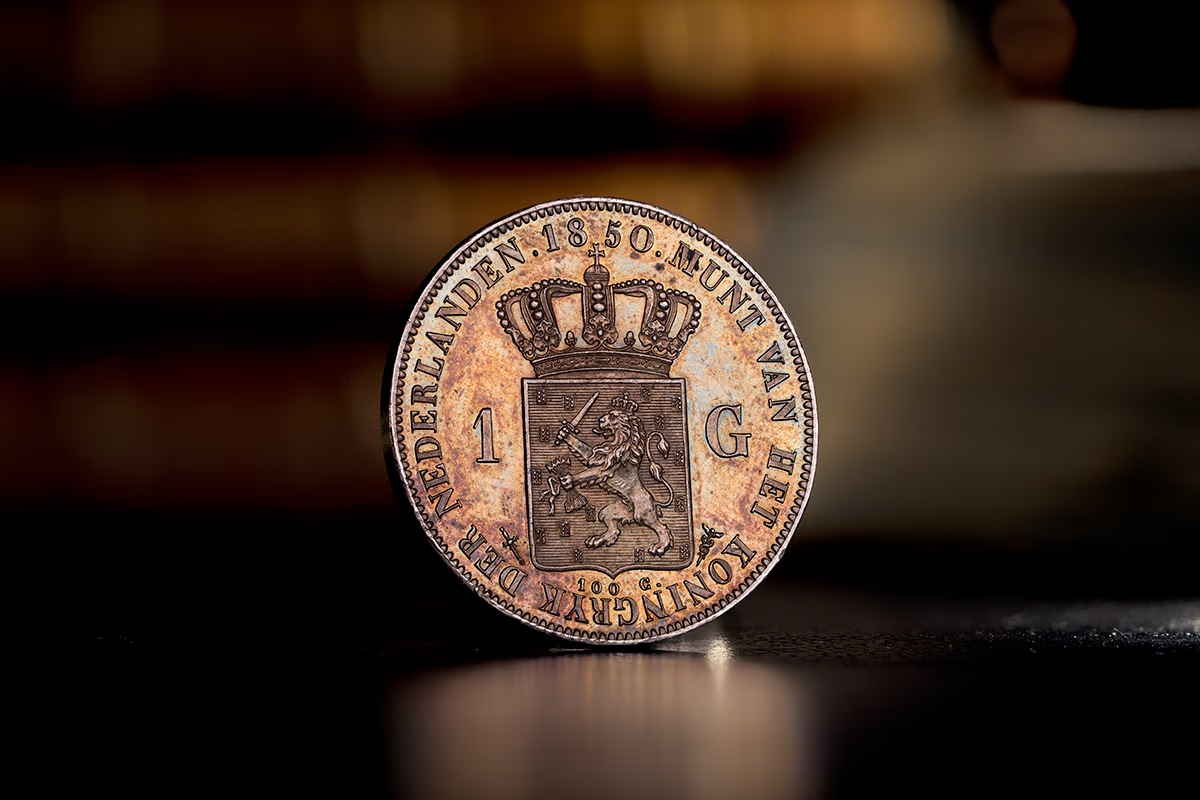
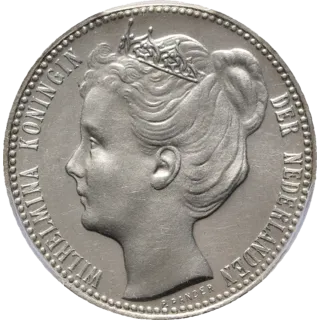
The 2½ gulden is the rijksdaalder of the Kingdom: the largest silver circulation coin of the Netherlands, struck from 1840 onwards. You will find it written in several ways. 2.5 gulden, 2 1/2 gulden and rijksdaalder all refer to the same piece.
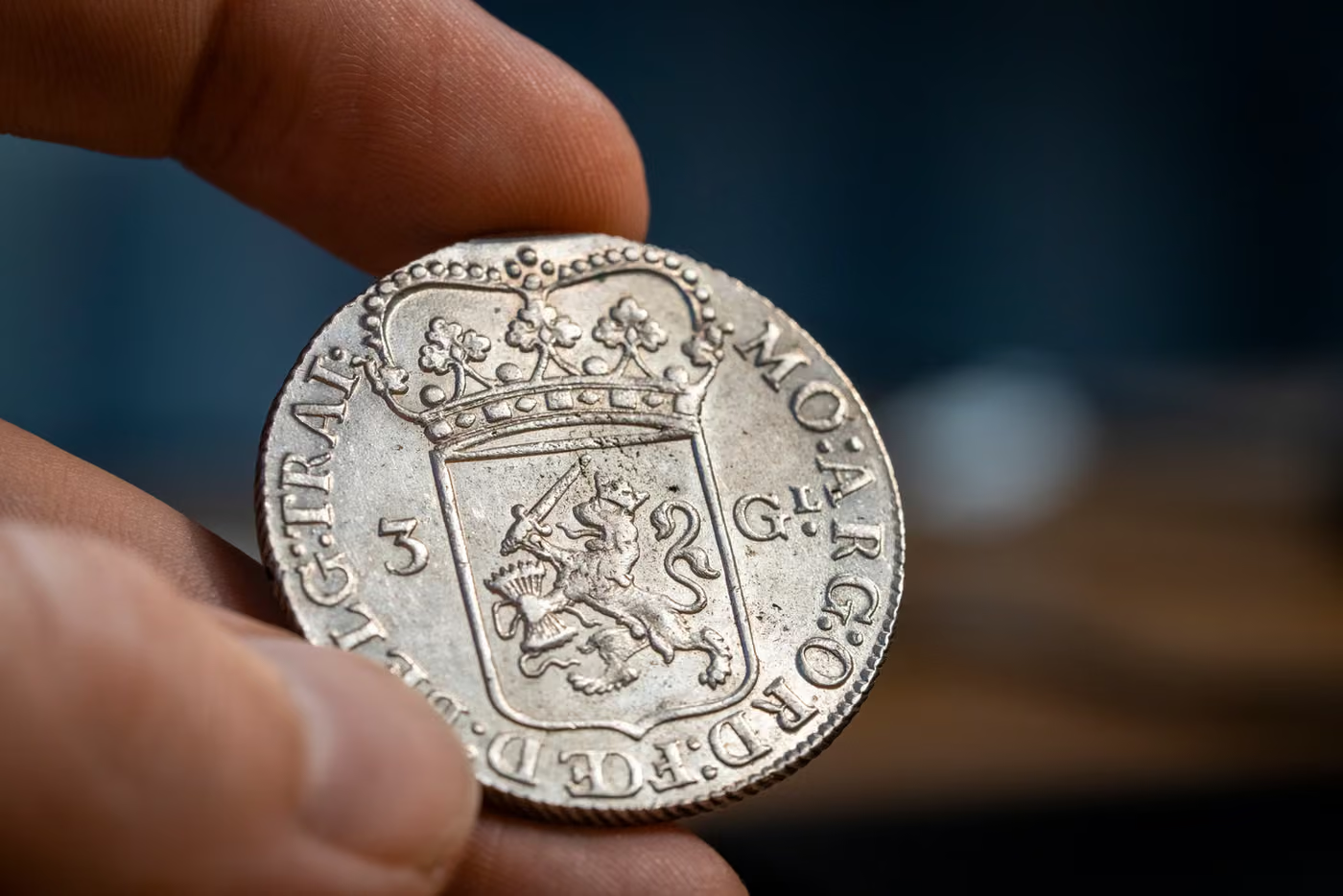
One point of confusion is worth clearing up. The rijksdaalder of the Dutch Republic from the 17th and 18th century is a different, heavier coin: around 29 grams at 885/1000, struck by the individual provinces. The 2½ gulden described here is the coin of the Kingdom, with the portrait of the monarch on the obverse. The lion dollar is often called a rijksdaalder too, but that is another trade coin again.
Schulman has been auctioning Dutch coins since 1880. With the 2½ gulden in particular the values vary widely, from a few tens of euros in silver value to figures running into the thousands for the rarest dates in top quality.
Also see the value of

Specifications by period
The coin was struck to the same size for almost a century. Only the silver fineness was lowered halfway through, and that is exactly the break that determines the silver value.
| Period | Weight | Fineness | Fine silver |
|---|---|---|---|
| 1840–1928 | 25 grams | 945/1000 | approx. 23.6 grams |
| 1929–1943 | 25 grams | 720/1000 | approx. 18 grams |
The diameter is approximately 38 mm in both cases. To calculate the melt value, multiply the fine weight by today's silver price per gram.
Silver value or collector value
This is the heart of every valuation, and it is the first distinction we make when a coin comes in.
Silver value only. Ordinary dates from the large mintages, in circulated condition and without particularities. These coins follow the silver price and are bought by weight.
Numismatic value. A scarce date, a small mint mark, a proof striking or a piece with original mint lustre. Here the silver price is no more than the floor and collector demand sets the price.
A mixed collection almost always contains both categories. That is why we separate them at valuation: we buy the common silver outright and bring the special pieces to auction.
What determines the value of your rijksdaalder
Four factors, in order of importance:
- Date and mintage. The differences are large. Some years were struck in millions, others in a few tens of thousands.
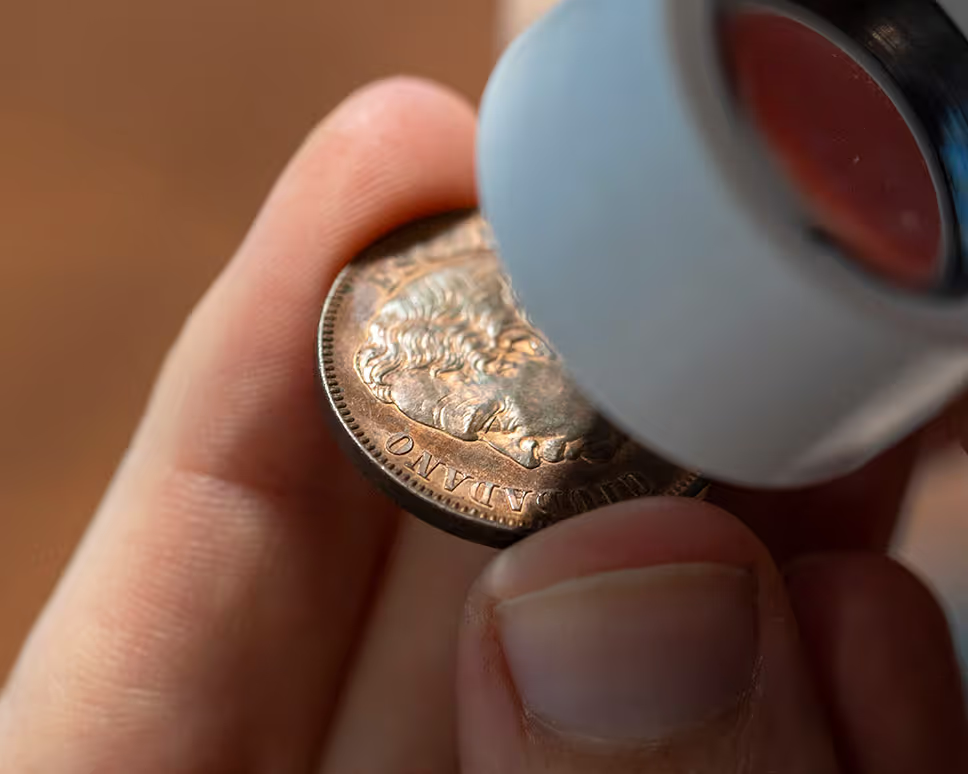
- Condition. On this large silver coin, wear shows first on the cheek and the hair of the monarch. Original lustre and a sharp edge inscription weigh heavily.
- Mint mark and variety. Small differences in the mint master mark or the portrait type can turn a common date into a rarity.
- Authenticity. Forgeries exist of the sought-after dates, often made by altering the date on a common coin.
If you want to learn what to look for yourself, read how to recognise rare coins and how do I know what my old coins are worth. Never polish your coin: it almost always destroys value.
Do you know your date and mint mark?
In the tables below that is the difference between common and rare. Send a photo of the obverse and the reverse and our numismatists will identify the date, mint mark and condition.
Have your coin assessedRarity of the rijksdaalder by monarch (1840–1943)
The tables below show which dates are scarce and which are common. The classification is based on the mintage combined with how much of it has survived, and on how often a date turns up in the trade.
We deliberately give no prices. Those move with the silver price and with supply and demand. What does not move is the rarity, and that is the factor that makes the difference between metal value and collector value.
Rijksdaalder William I (1840)
| Year | Mintage | Rarity |
|---|---|---|
| 1840 | 44.376 | Scarce |
Under William I the rijksdaalder was struck in one year only, in a small mintage. Note that forgeries of this date are known.
Rijksdaalder William II (1841–1849)
| Year | Mintage | Rarity |
|---|---|---|
| 1841 | 53.535 | Rare |
| 1842 | 909.883 | Fairly common |
| 1843 | 742.659 | Scarce |
| 1844 | 278.534 | Scarce |
| 1845 · without bar | 3.589.217 | Fairly common |
| 1845 · with bar | 505.330 | Fairly common |
| 1845 · lily with pearl | 163.868 | Scarce |
| 1846 · lily | 3.029.712 | Fairly common |
| 1846 · sword | — | Fairly common |
| 1847 | 8.958.675 | Common |
| 1847/4 | — | Common |
| 1848 | 8.839.330 | Common |
| 1848/4 | — | Common |
| 1849 | 1.582.927 | Fairly common |
At just over 53,000 pieces, 1841 is by far the scarcest date. For 1845 and 1846 the bar between crown and shield and the mint master mark (lily, lily with pearl or sword) determine which variety you have.
Rijksdaalder William III (1849–1874)
| Year | Mintage | Rarity |
|---|---|---|
| 1849 | 439.307 | Fairly common |
| 1850 | 5.008.210 | Common |
| 1851 | 3.647.493 | Fairly common |
| 1852 | 4.546.764 | Common |
| 1852 · variety | — | Scarce |
| 1853 | 234.128 | Scarce |
| 1853/52 | — | Scarce |
| 1854 | 4.334.526 | Common |
| 1854/52 | — | Scarce |
| 1855 | 2.082.046 | Fairly common |
| 1856 | 909.345 | Fairly common |
| 1857 | 3.353.072 | Fairly common |
| 1858 | 8.357.846 | Common |
| 1859 | 4.306.594 | Common |
| 1860 | 847.104 | Fairly common |
| 1861 | 876.003 | Scarce |
| 1862 | 3.304.118 | Fairly common |
| 1863 | 50.652 | Rare |
| 1864 | 2.033.644 | Fairly common |
| 1865 | 2.287.612 | Common |
| 1866 | 3.652.608 | Common |
| 1867 | 4.948.886 | Common |
| 1868 | 4.040.021 | Common |
| 1869 | 5.046.192 | Common |
| 1870 | 6.639.847 | Common |
| 1871 | 6.875.035 | Common |
| 1872 | 13.421.471 | Common |
| 1873 | 5.517.381 | Common |
| 1874 | 3.040.726 | Common |
| 1874 · sword with clover leaf | 9.755.000 | Common |
1863 is the key date of the entire series: fewer than 51,000 pieces. Forgeries of this date are known as well. After 1874 the silver rijksdaalder was not struck again for over fifty years.
Rijksdaalder Wilhelmina (1898–1943)
| Year | Mintage | Rarity |
|---|---|---|
| 1898 · with dot | 100.000 | Scarce |
| 1898 · without dot | — | Rare |
| 1929 | 4.400.000 | Common |
| 1930 | 11.600.000 | Common |
| 1931 | 4.720.000 | Common |
| 1932 · normal hair | 6.000.000 | Common |
| 1932 · coarse hair | — | Fairly common |
| 1933 | 3.560.000 | Common |
| 1937 | 4.000.000 | Common |
| 1938 · normal hair | 2.000.000 | Common |
| 1938 · coarse hair | — | Fairly common |
| 1939 | 3.760.000 | Common |
| 1940 | 4.640.000 | Fairly common |
| 1943 · Denver, for the Dutch East Indies | 2.000.000 | Common |
1898 is the coronation rijksdaalder and, at 100,000 pieces, the scarcest of this group. From 1929 the fineness drops to 720/1000 and most dates trade on silver value. Dangerous date forgeries exist of the 1932 and 1938 coarse hair varieties, so always have those assessed.
We look at which route pays best: a direct sale or a place in the auction.
Highest auction results for rijksdaalders at Schulman
These three rijksdaalders were sold in our own auctions. All three came out far above their silver value, and in every case quality was the deciding factor.
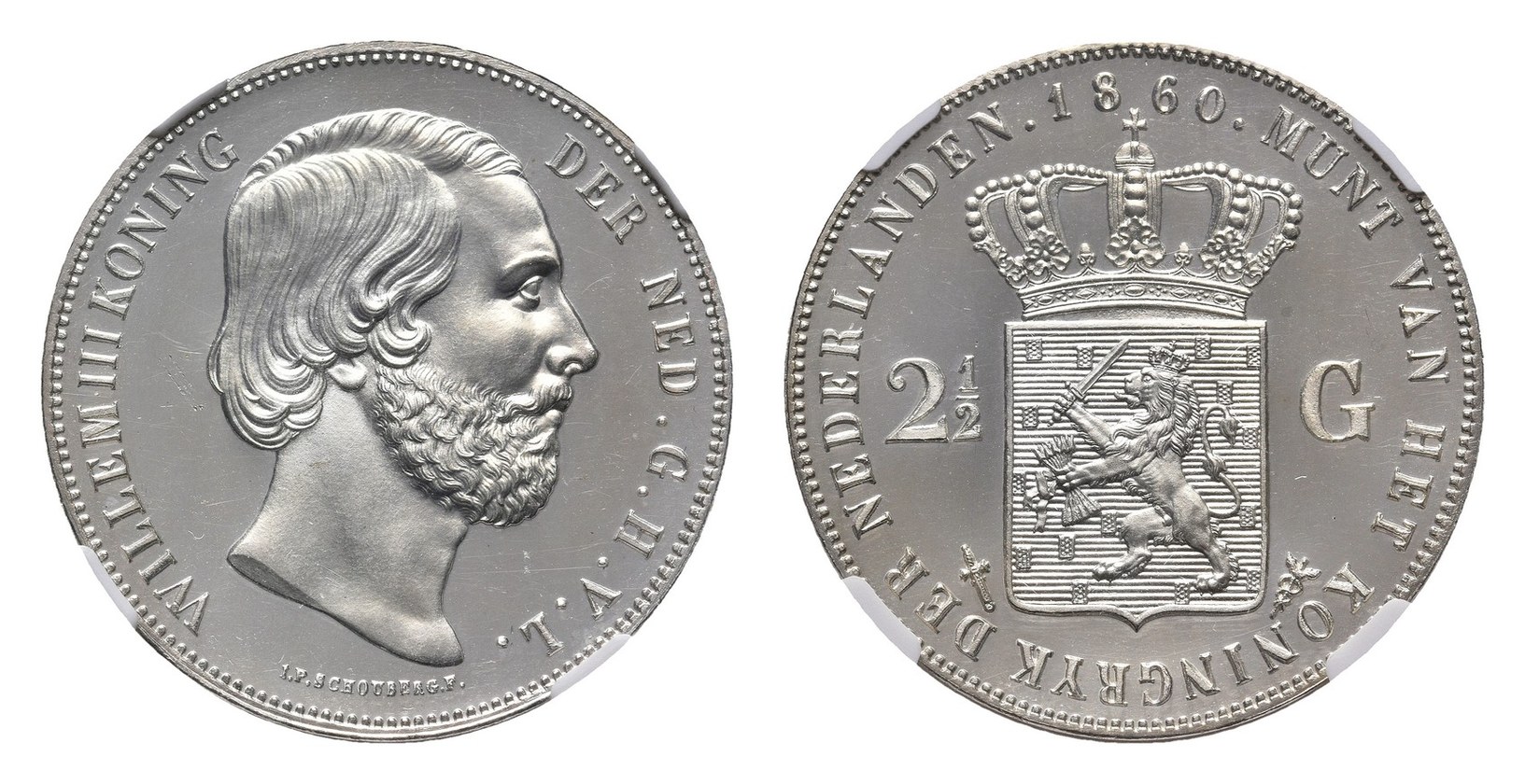
2½ Gulden 1860 – Willem III
Auction result: €44,000
Auction: Selection Auction 380 (October 2024)
Type I a (1849-1874), struck with polished dies and graded PF65 by NGC. NGC records no example of this date in a higher grade.
Our catalogue classifies the coin as RRR, extremely rare. It is the highest result we have recorded for a rijksdaalder of the Kingdom.
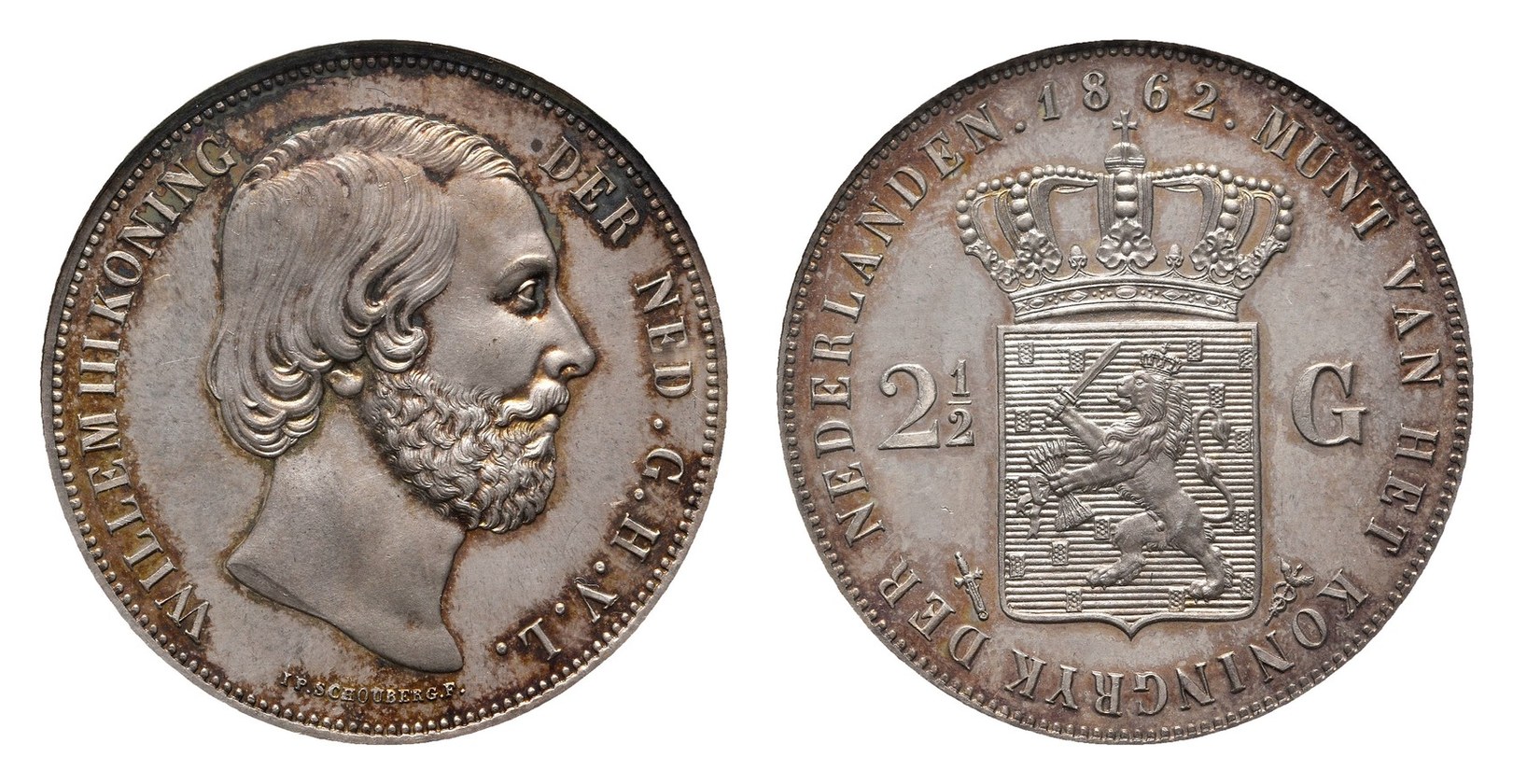
2½ Gulden 1862 – Willem III
Auction result: €35,000
Auction: Auction 383 (March 2025)
The same type and the same quality class as the 1860 piece: NGC PF65 and again the highest graded example NGC knows.
Two top results within eighteen months show that demand for these proof strikes is holding up.
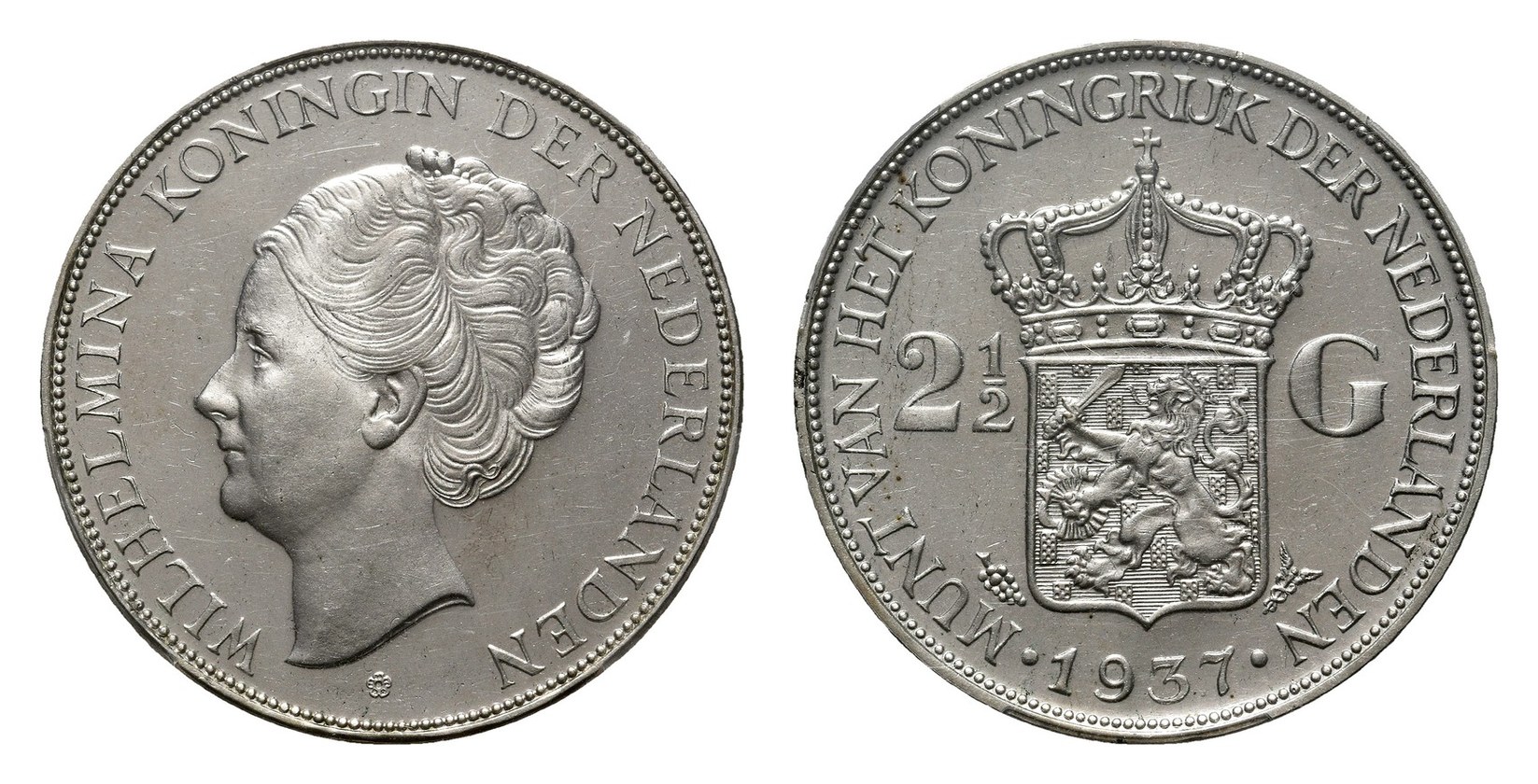
2½ Gulden 1937 – Wilhelmina
Auction result: €13,000
Auction: Auction 383 (March 2025)
Type IV b (1937-1940), the 'older head' by J. C. Wienecke, struck with polished dies and certified PR63 by PCGS.
A twentieth-century rijksdaalder in circulated condition stays close to its silver value. As a proof strike the same date brings a multiple of that.
Did you find your date listed as scarce or rare in the tables above? Have the coin assessed before you sell. Send in a photo for a free appraisal or read what grading means for your coin.
Watch out for forgeries
For the sought-after 1932 and 1938 coarse hair dates, date forgeries occur: a common coin with a digit reworked. They are hard to spot with the naked eye. Always have a piece sold to you as rare assessed, and for a valuable coin consider professional grading.
Selling or auctioning your rijksdaalder
We will look at what you have free of charge and tell you honestly which category your coins fall into. If you have a mixed collection we separate it: we buy the common silver outright and bring the special pieces to auction. That way you get the most out of both parts.
The same applies to related pieces. If you also have gold 10 gulden coins, silver riders or other coins alongside your rijksdaalders, feel free to bring them in together. Make an appointment for a valuation or send us photographs, and we will let you know what the options are.
More than one coin, or a whole collection?
We go through the collection and decide, piece by piece, what can be sold directly and what goes to auction.
Book an appraisal