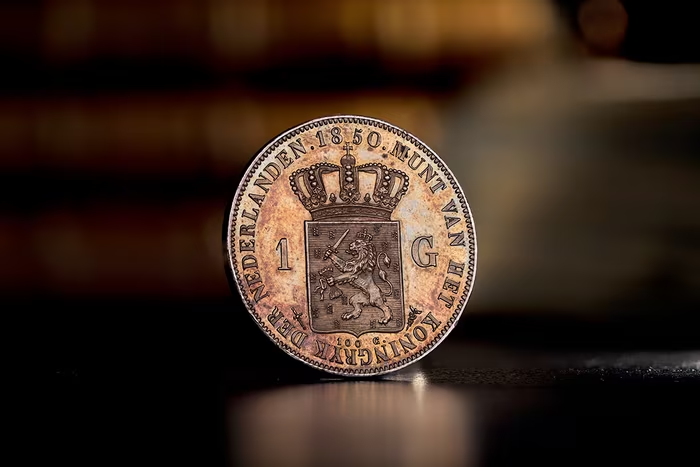
Short answer: a silver guilder is always worth at least its silver value. For most twentieth-century guilders that is the floor: they were struck in large numbers and trade around the current silver price. But for early dates, a rare mint mark or exceptional condition, the auction value is a multiple of that. The difference between those two situations determines whether you are better off selling your guilder outright or sending it to auction.
Current silver price and indicative silver value
The silver price below gives an indication of the silver value of your guilder. It is not a fixed selling price and can differ from trade and auction prices.
The calculator above works out the silver value. Whether your guilder also carries collector value depends on its date and condition. To be sure, have it appraised free of charge.
Silver value is the floor, not the final price
The highest guilder in our auctions sold for €19,000. With early dates and top quality the price is a multiple of the silver. Send a photo of the obverse and the reverse and our numismatists will place your example.
Request a free appraisalWhat is a silver guilder?
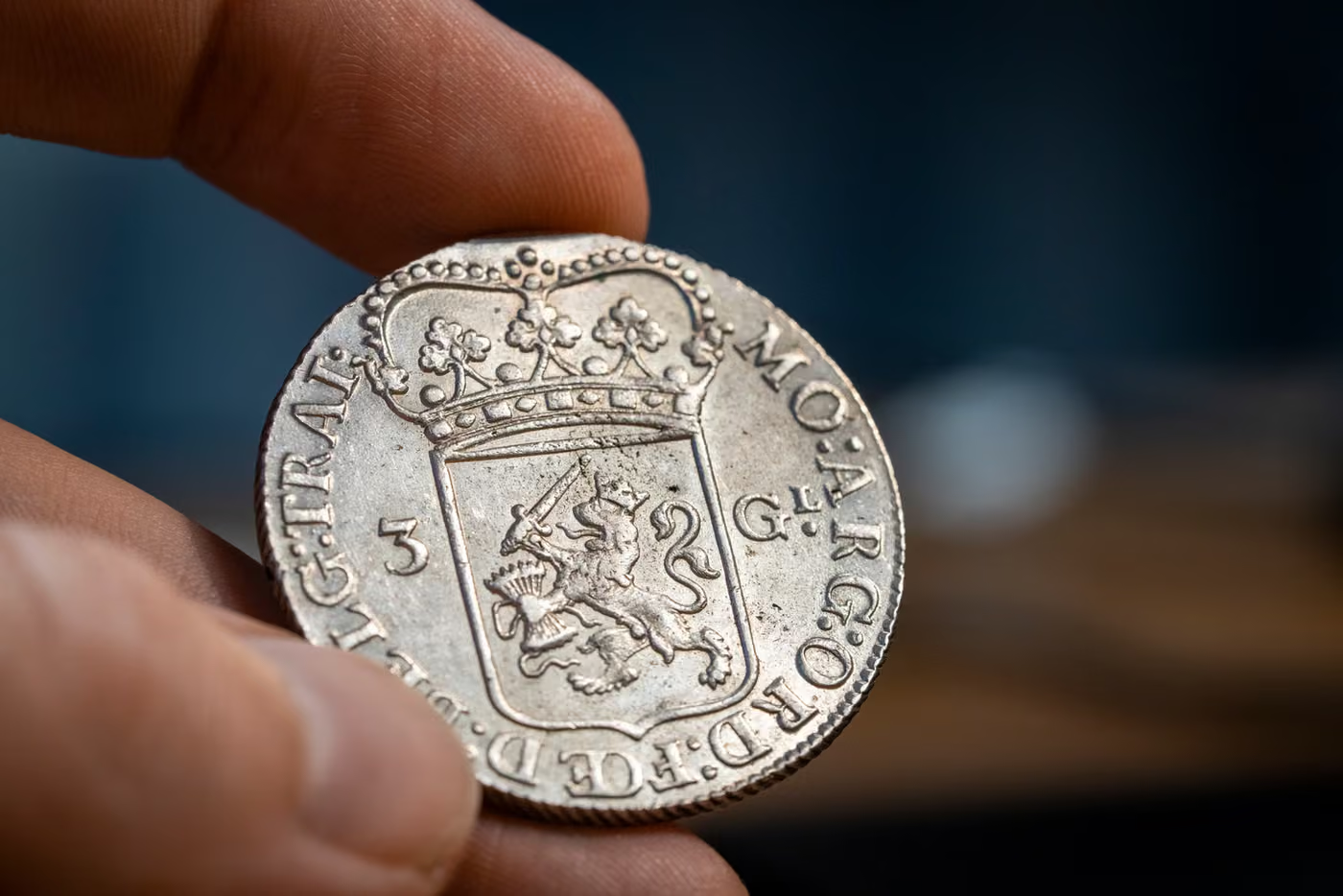
The guilder was the Dutch currency from 1816 until the introduction of the euro. As a coin, the silver guilder was struck under five monarchs: William I, William II, William III, Wilhelmina and Juliana. All of these pieces are silver, but they differ considerably in weight, silver content, mintage and rarity.
Schulman has been auctioning Dutch coins since 1880 and knows the silver guilder in all its variants. Values vary widely for this coin in particular: from a few euros in silver value to figures running into the thousands for the rarest dates in top condition.
Also see the value of
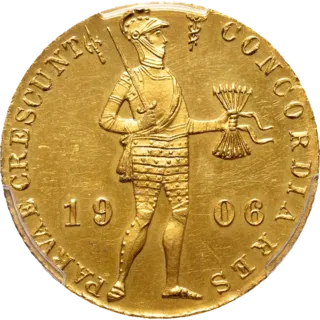

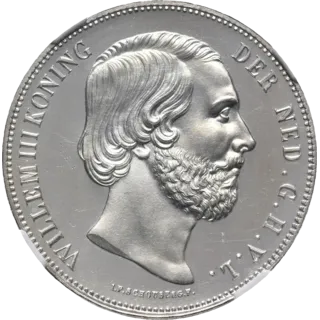
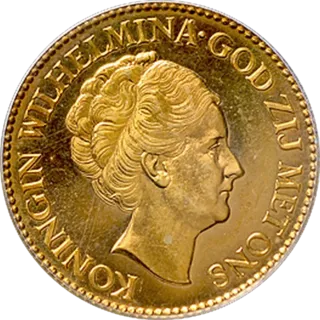
The silver guilder by monarch
Anyone estimating the value of a guilder starts with the monarch on the obverse. That determines the period, and with it the silver content and the mintage.
William I (1818-1840)
The first guilders of the Kingdom. Relatively low mintages and often heavily circulated. Well-preserved examples are scarce and achieve considerably more than silver value at auction.
William II (1840-1849)
A short reign with a limited number of dates. This makes the series manageable, but it contains several genuine rarities.
William III (1849-1890)
The longest nineteenth-century series. Some dates are common, others were struck in small numbers and count as key pieces for collectors.
Wilhelmina (1892-1945)
The largest group, with several portrait types. This series shows the widest gap between mass-produced years and a few rare issues.
Juliana (1954-1967)
The last silver guilders. These were struck in large numbers and in practice trade on silver weight, including well-preserved examples.
Silver value or numismatic value
This is the heart of every valuation, and it is exactly the distinction we make when your coins arrive.
Silver value only. Your coin is common, heavily circulated or comes from a high-mintage year. Its value then follows the silver price. For these lots we buy directly, so you do not have to wait for an auction. See selling silver coins for how that works.
Numismatic value. Your coin is rare in date or mint mark, is in exceptional condition, or has a notable provenance. The collector value then exceeds the silver value, sometimes by a wide margin. Such pieces achieve the most at auction, because collectors from the Netherlands and abroad bid against each other.
The difference is not always visible to the naked eye. Two guilders that look identical can be tens of euros apart because of a mint mark or a few grades in condition. A free appraisal settles the question.
What determines the value of your silver guilder
| Factor | Why it matters |
|---|---|
| Date | Determines the mintage. A year with a low mintage is structurally scarcer and therefore more sought after. |
| Mint mark | Small marks beside the date identify the mint master and mint. Some combinations are rare. |
| Condition | The difference between circulated and near-uncirculated is often the single largest value factor for silver guilders. |
| Silver content | Sets the floor. The fineness differs by period, so the same denomination does not always contain the same amount of silver. |
| Originality | A polished or damaged coin loses much of its collector value, even when the silver itself is intact. |
That last factor is often underestimated. Never polish your coins before an appraisal: you remove value that does not come back. Read why in why you should never clean or polish your coins.
How to recognise a rare guilder
Start with the date and the mint mark, and only then assess condition. A common date in top condition can be worth more than a rare date that is heavily worn, but the combination of both is where the highest results lie.
For the reasoning behind rarity and condition grades, how to recognise rare coins and coin grading will help you further. If you want to understand valuation more broadly, read how do I know what my old coins are worth.
Do you know your date and mint mark?
In the tables below that is the difference between common and rare. Send a photo of the obverse and the reverse and our numismatists will identify the date, mint mark and condition.
Have your coin assessedRarity of the silver guilder by monarch (1818–1945)
The tables below show which dates of the silver guilder are scarce and which are common. The classification is based on the mintage combined with how much of it has survived, and on how often a date turns up in the trade.
We deliberately give no prices. Those move with the silver price and with supply and demand. What does not move is the rarity, and that is the factor that makes the difference between metal value and collector value.
- Extremely rare – top piece, rarely offered
- Rare – hard to find
- Scarce – limited supply
- Fairly common – regularly available
- Common – current piece, readily available
Dates with a slash (1832/24 for example) are overdates: a die from an earlier year that was reworked. They appear as a separate row, with a dash in the mintage column, because their number is included in the mintage of the base year.
1 guilder William I (1818–1840)
| Year | Mintage | Rarity |
|---|---|---|
| 1818 | 42.700 | Extremely rare |
| 1819 | 252.202 | Rare |
| 1820 | 543.567 | Scarce |
| 1821 | 1.145.097 | Scarce |
| 1822 | 80.000 | Extremely rare |
| 1823 | 743.396 | Rare |
| 1823 · Brussels | 25.170 | Extremely rare |
| 1824 | 1.096.250 | Scarce |
| 1828 | 61.600 | Rare |
| 1829 · Brussels | 382.810 | Rare |
| 1831 | 120.000 | Rare |
| 1831/21 | — | Rare |
| 1832 | 1.362.064 | Scarce |
| 1832/21 | — | Scarce |
| 1832/23 | — | Scarce |
| 1832/24 | — | Scarce |
| 1832/28 | — | Rare |
| 1837 | 382.699 | Scarce |
| 1840 | 99.254 | Scarce |
The guilders with the Brussels mint mark (1823 and 1829) were struck at a separate mint and are far scarcer than the Utrecht pieces of the same year. 1818 and 1822 are the key dates of this series.
1 guilder William II (1840–1849)
| Year | Mintage | Rarity |
|---|---|---|
| 1840 | a few pieces | Extremely rare |
| 1842 · short bust | 660.815 | Rare |
| 1842 · long bust | — | Rare |
| 1843 | 1.739.623 | Scarce |
| 1844 | 1.574.618 | Scarce |
| 1845 · without bar | 3.802.556 | Common |
| 1845 · with bar | 221.105 | Scarce |
| 1846 · lily | 900.558 | Fairly common |
| 1846 · sword | 3.772.335 | Common |
| 1847 | 8.279.321 | Common |
| 1847/4 | — | Common |
| 1848 | 13.614.913 | Common |
| 1848/4 | — | Common |
| 1849 | 650.000 | Scarce |
| 1849/4 | — | Scarce |
Only a few pieces of 1840 are known. For 1845 and 1846 a detail determines the rarity: the bar between crown and shield, and the mint master mark (lily or sword). From 1847 the mintages rise sharply and the guilders become common.
1 guilder William III (1849–1890)
| Year | Mintage | Rarity |
|---|---|---|
| 1850 | proof pieces only | Extremely rare |
| 1851 | 2.125.148 | Fairly common |
| 1853 | 652.035 | Rare |
| 1853/50 | — | Rare |
| 1853/51 | — | Rare |
| 1854 | 4.511.054 | Common |
| 1855 | 5.133.283 | Common |
| 1856 | 4.954.661 | Common |
| 1856/54 | — | Fairly common |
| 1857 | 2.125.500 | Fairly common |
| 1858 | 4.199.241 | Common |
| 1859 | 2.717.216 | Fairly common |
| 1860 | 4.035.791 | Common |
| 1861 | 5.078.886 | Common |
| 1863 | 7.986.113 | Common |
| 1864 | 3.600.143 | Fairly common |
| 1865 | 6.401.755 | Common |
| 1866 | 1.002.450 | Fairly common |
| 1867 | a few proof pieces | Extremely rare |
1850 and 1867 exist only as proof pieces. 1853 is the only genuine scarcity in an otherwise generously struck series. After 1866 the silver guilder was no longer struck under William III.
1 guilder Wilhelmina (1892–1945)
| Year | Mintage | Rarity |
|---|---|---|
| 1892 | 3.500.000 | Common |
| 1896 | 100.000 | Rare |
| 1897 | 2.500.000 | Common |
| 1898 | 2.000.000 | Fairly common |
| 1901 | 2.000.000 | Fairly common |
| 1904 | 2.000.000 | Fairly common |
| 1905 | 1.000.000 | Scarce |
| 1906 | 500.000 | Rare |
| 1907 | 5.100.000 | Common |
| 1908 | 4.700.000 | Common |
| 1909 | 2.000.000 | Fairly common |
| 1910 | 1.000.000 | Scarce |
| 1911 | 2.000.000 | Fairly common |
| 1912 | 3.000.000 | Common |
| 1913 | 8.000.000 | Common |
| 1914 | 15.785.000 | Common |
| 1915 | 14.215.000 | Common |
| 1916 | 5.000.000 | Fairly common |
| 1917 | 2.300.000 | Fairly common |
| 1922 | 9.550.000 | Common |
| 1923 | 8.050.000 | Common |
| 1924 | 8.000.000 | Common |
| 1928 | 6.150.000 | Common |
| 1929 | 32.350.000 | Common |
| 1930 | 13.500.000 | Common |
| 1931 | 38.100.000 | Common |
| 1938 | 5.000.000 | Common |
| 1939 | 14.200.000 | Common |
| 1940 | 21.300.000 | Common |
| 1943 · Denver, for the Dutch East Indies | 20.000.000 | Common |
| 1944 · Philadelphia | 105.125.000 | Fairly common |
| 1944 · Philadelphia, variety | — | Scarce |
| 1945 · Philadelphia | 25.375.000 | Rare |
1896 and 1906 are the scarcest dates. From 1922 the fineness drops from 945 to 720/1000 and these guilders trade mainly on silver value. The guilders of 1943–1945 were struck in America during the occupation: Denver for the Dutch East Indies, Philadelphia for the Netherlands. Only a small part of the 1945 issue actually entered circulation.
We look at which route pays best: a direct sale or a place in the auction.
Highest auction results for silver guilders at Schulman
The coins below were sold in our own auctions. They show how far a guilder can rise above its silver value once date and quality come together.
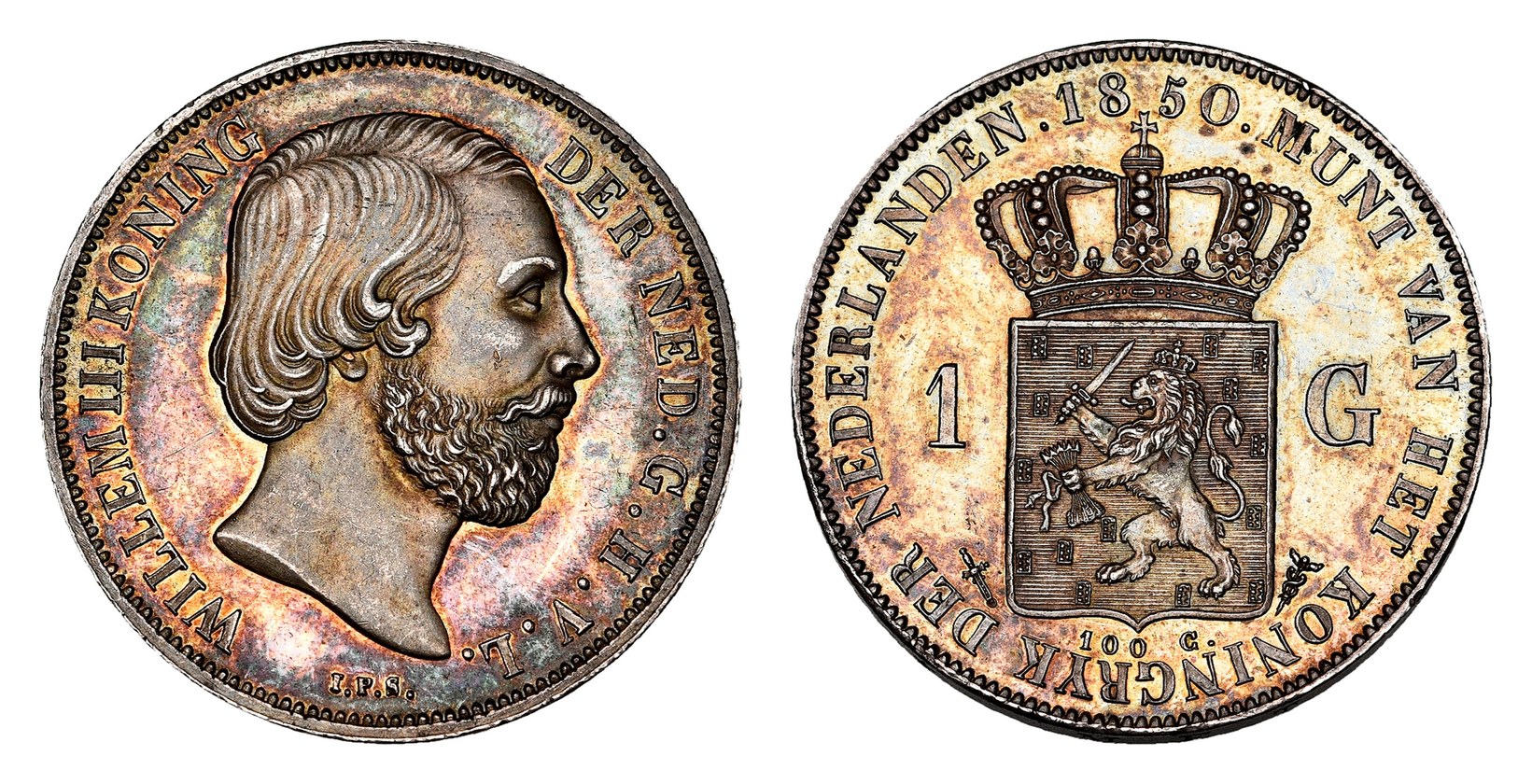
1 Gulden 1850 – Willem III
Auction result: €19,000
Auction: Auction 392 (June 2026)
The date 1850 is one of the hardest guilders to find in the William III series. The portrait is by J. P. Schouberg; the reverse carries the 100 c designation below the crowned arms.
This example weighs 9.96 grams and was struck with polished dies. Our catalogue classifies it as RRR, extremely rare.
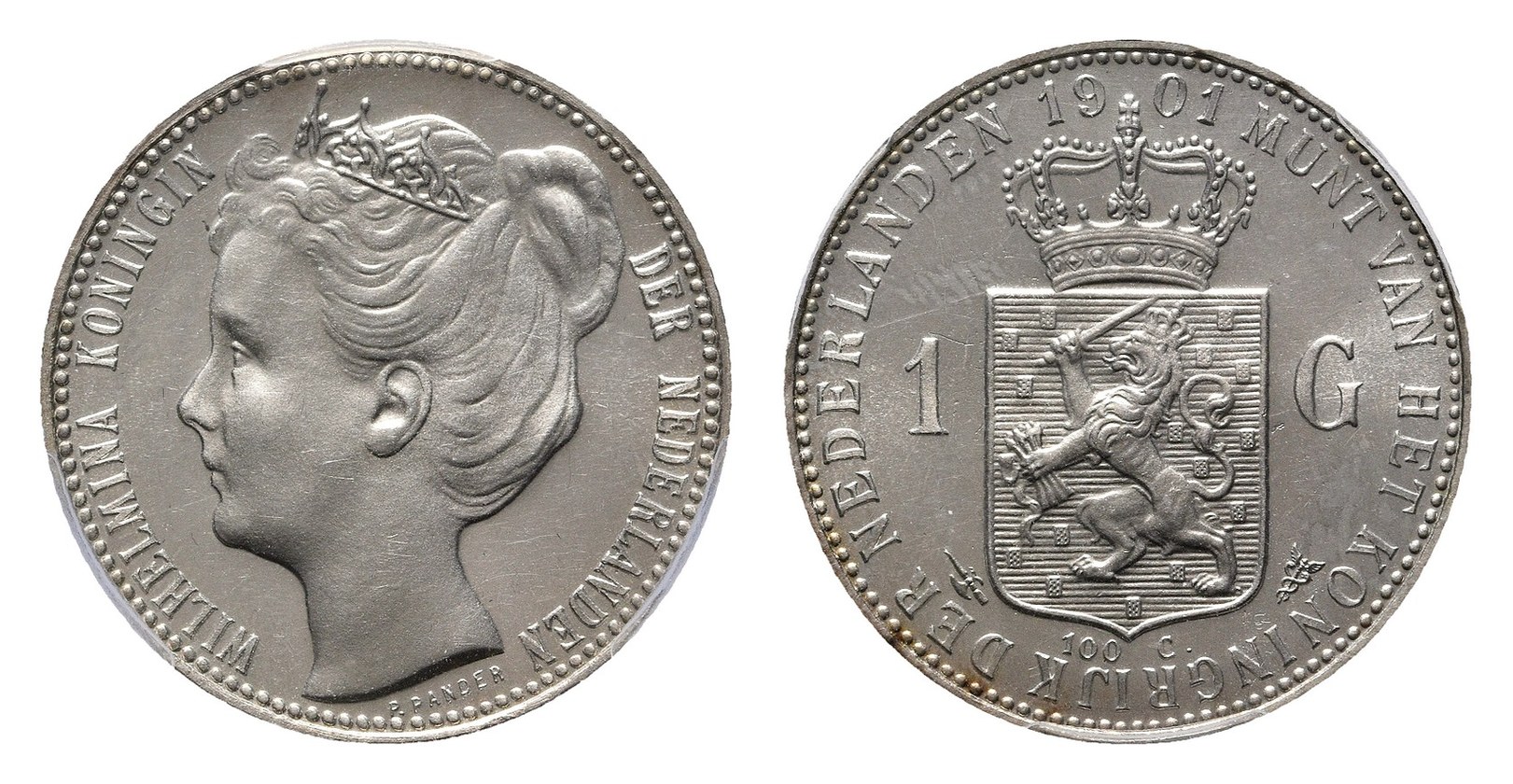
1 Gulden 1901 – Wilhelmina
Auction result: €10,000
Auction: Auction 383 (March 2025)
The coronation type by P. Pander, here struck with polished dies. PCGS graded the coin PR64 and records no example in a higher grade.
The edge inscription reads ZIJ rather than ZY. A detail like this sets the variety apart and helps determine what a collector is willing to pay.

1 Gulden 1898 – Wilhelmina
Auction result: €3,000
Auction: Auction 387 (October 2025)
Not a proof but an ordinary circulation strike, and the date 1898 is not rare in itself. In NGC MS65 it certainly is.
This result shows why quality weighs more heavily than the date alone. The same date in circulated condition stays close to its silver value.
Did you find your date listed as scarce or rare in the tables above? Then it is worth having the coin assessed before you sell. Send in a photo for a free appraisal or read what grading means for your coin.
Selling or auctioning your silver guilder
We look at what you have free of charge and tell you honestly which category your coins fall into. If you have a mixed collection, we split it: we buy the common silver directly and take the special pieces to auction. That way you get the most out of both parts.
The same applies to related pieces. If you have silver riders, gold ten guilder coins or other coins alongside your guilders, feel free to bring them together. Make an appointment for an appraisal or send us photographs, and we will let you know what the options are.
More than one coin, or a whole collection?
We go through the collection and decide, piece by piece, what can be sold directly and what goes to auction.
Book an appraisal